
阿根廷,我来了! Argentina,?Here?I?Am!
阿根廷,我来了!
Argentina, Here I Am!
——谁在期待米莱的电锯失灵?从殖官主义的跨意识形態繁衍到共生经济学的现实检验
Who Wants Milei’s Chainsaw to Fail? From Bureaucolonialism to the Empirical Test of Symbionomics
钱宏(Archer Hong Qian)
2026年11月25日于阿根廷布宜诺斯艾利斯
内容提要
米莱的电锯究竟锯向了谁?为什么世界上有人期待他成功,有人却巴不得他失败?米莱改革究竟属于哪一个经济学派?似乎哪派都沾上边:
奥地利经济学派(思想渊源):个人行动、自发秩序。
无政府资本主义(个人政治经济哲学):私人产权、自愿契约、限制国家权力。
货币主义(宏观政策工具):货币稳定、抑制通胀。
新自由主义(常见的外部理论分类):市场开放、私有化、减少管制。
秩序自由主义(制度条件的研究视角):法律秩序与竞争规范。
休克疗法(部分改革实施方式):快速财政调整与结构性改革。
凯恩斯主义(财政紧缩政策的批评视角):总需求、就业与经济周期。
为什么又都不全是?因为上述理论与政策范式均未能充分揭示米莱改革所触及的跨意识形態的组织繁衍机制,也未能将改革的根本目的——激活个人与社区生命自组织连接活力、重建组织信托与提升社会综合净效能——贯通为一个完整的新经济学范式诉求。
从共生经济学(Symbionomics)观察米莱近三年的改革实践,可以跳出资本主义与社会主义、市场自由与政府管控、增长优先与分配优先、公与私、左与右的世纪钟摆式意识形態争论,揭示殖官主义(Bureaucolonialism)跨意识形態、跨时空的癌变式组织繁衍特性及其关键制度根基——决策免责权。
从电锯改革到《五月公约》(Pacto de Mayo),阿根廷已经开启了从破除殖官主义走向重建组织信托的制度探索。本文通过实证数据与典型案例,运用共生经济学的观点方法,进一步探讨人类经济行为如何从GDP走向GDE,从K诊走向Q疗,从削减无效组织消耗走向释放生命自组织连接活力,从决策追踪与问责走向组织信托重建。
电锯之后,建设什么?如何建设?阿根廷能否由此重新出发?
阿根廷的探索,关乎一个国家的未来,也关乎一个世界性的时代课题——重建组织信托。
一、带着几个问题,我来到了阿根廷
今天抵达阿根廷首都布宜诺斯艾利斯。这座曾被誉为“南美巴黎”的城市,有着近五百年的历史,值得慢慢走读,细细品味。现在,我还不急于书写阿根廷的历史。
此行特别吸引我的,是一个手持电锯走上政治舞台的经济学家——哈维尔·米莱(Javier Milei)。三年前,他开启了一场举世瞩目的国家改革。有人期待他的成功,有人冷静观察,也有人把他的成败视为意识形態竞争的一场较量。
然而,如果只看到米莱手中的电锯,就会漏掉他在2024年倡议并签署的《五月公约》。一个要打破什么,一个要共同建立什么。这两件事放在一起,才有可能理解这场改革的完整内涵。
2026年,我完成了《共生经济学概论》的修订,也正在撰写《共生加拿大——从多元、生態到交互契合共生新秩序》。带着这两部书所探究的问题,我来到了阿根廷。
二、为什么是阿根廷?为什么是米莱?为什么是这个时候?
1. 国内背景:资源富国的百年困局
20世纪初,阿根廷曾跻身世界较富裕国家之列。潘帕斯草原、欧洲移民、铁路港口与全球农牧产品贸易,共同创造了黄金时代。然而此后一个世纪,军事政变、经济民族主义、债务违约、货币贬值与反复衰退交织。
1946年庇隆当选总统,社会正义、劳工权益及产业保护成为重要政策。1990年代梅内姆推行私有化与比索美元挂钩,却未能避免2001年危机。基什内尔时期重新强化国家干预;2015—2019年马克里尝试渐进改革,又遭遇债务与货币危机。2018年及2022年,IMF相继提供大规模融资。2023年旱灾进一步打击农产品出口。
从庇隆到梅内姆,再到基什内尔与马克里,国家干预与市场自由轮番成为政策重心。为什么所有制、分配方式和执政者屡经改变,财政与货币危机依然反复出现?有必要把目光从左右政策的钟摆移向组织权力、资源控制和责任承兑的关系。
表1 米莱上任时的经济背景(INDEC、IMF历史统计)
| 指标 | 2023年 |
| 年末同比通胀率 | 211.4% |
| 12月单月通胀率 | 25.5% |
| 下半年城市人口贫困率 | 41.7% |
| 总体财政赤字/GDP | 约4.6% |
2. 国际背景:重新审视政府与社会的关系
2008年金融危机与2020年疫情之后,多国政府扩大财政与货币干预,债务、通胀与生活成本问题凸显。政府组织扩张所增加的成本,最终由谁承担?
在产业补贴与贸易保护重新受到重视的国际背景下,米莱的去管制改革提供了另一条实践路径。2025年4月IMF批准200亿美元、为期四年的融资计划;2026年5月的评估确认财政稳定和去管制取得进展〔Ⅰ〕。
三、谁在等待米莱的电锯失灵?
弗吉尼娅·波斯特雷尔(Virginia Postrel)在《未来及其敌人》中讨论开放、演变的社会秩序与试图控制既有秩序的力量之间的冲突。这为理解改革中的阻力提供了思想参照〔Ⅱ〕。
第一类是依赖既有行政许可、特许经营、财政补贴和贸易保护获取特殊收益的利益组织。改革可能触及其资源与地位。如果取消不必要的审批和特许权后社会依然能够有效运行,原有组织就需要重新证明自身的公共价值。
第二类是依托既有政治经济组织网络获取利益的政治力量。工会与工人不能简单画等号,政党与选民不能简单画等号,政府与人民更不能简单画等号。受托组织的利益与委托人的利益并不天然一致。
第三类是将既有经济学理论奉为圭臬的人。米莱改革的实践成效,将迫使各种经济理论重新检验其理论预设及政策主张。
第四类是将阿根廷改革的成败视为国际意识形態竞争胜负的政治力量。
四、米莱改革究竟属于哪一派?似乎都有,又都不全是——共生经济学的诠释
米莱本人明确认同奥地利经济学派,在哲学上自称无政府资本主义者,在现实治理中又自称最小国家主义者。2024年5月他在胡佛研究所的演讲中清楚区分了这几个层次〔Ⅴ〕。这一思想归属应当尊重事实。
但米莱本人属于哪一个学派,与我们用什么理论解释他的整个改革进程,是两个不同的问题。
表2 米莱改革与七种经济思想及政策范式的关联
| 经济思想及政策范式 | 与米莱改革的关系 | 主要理论主张及政策取向 |
| 奥地利经济学派 | 思想渊源 | 个人行动、分散知识、自发秩序 |
| 无政府资本主义 | 个人政治经济哲学 | 私人产权、自愿契约、限制国家权力 |
| 货币主义 | 部分宏观政策工具相通 | 货币稳定、抑制通胀 |
| 新自由主义 | 常见的外部理论分类 | 市场开放、私有化、减少管制 |
| 秩序自由主义 | 制度条件的研究视角 | 法律秩序、竞争规范 |
| 休克疗法 | 部分改革实施方式 | 快速财政调整与结构性改革 |
| 凯恩斯主义 | 财政紧缩政策的批评视角 | 总需求、就业与经济周期 |
为什么又都不全是?上述理论与政策范式各有其历史背景、问题意识、理论预设和政策诉求,却未能充分揭示米莱改革所触及的殖官主义跨意识形態、跨时空的癌变式组织繁衍机制及其关键制度根基——决策免责权。
共生经济学从生命本原出发。公寓于私,众私即公;公共价值来自具体生命的共同需要。公有与私有、市场与计划、增长与分配,都须依据其对生命的综合净效能来选择和校准。
共生经济学以生命自组织连接动態平衡(动能)与交互主体共生(势能)的相应相辅相成为理论基础,将激活个人与社区生命自组织连接活力、重建组织信托、提升社会综合净效能贯通起来,由此跳出资本主义与社会主义、市场自由与政府管控、增长优先与分配优先、公与私、左与右的世纪钟摆式意识形態争论。
五、剥开各种意识形態的画皮:辨识殖官主义
资本主义国家可以出现官僚组织膨胀,社会主义国家同样如此;私有企业可以借垄断控制资源,公共机构也可以借行政权力控制资源。金融机构可以将经营失败的成本转嫁给纳税人,政府机构也可能将决策失误的成本转嫁给普通家庭。
我将组织权力与资源控制能力的自我繁殖、组织收益与责任承担的脱节以及成本持续向社会转嫁,概括为殖官主义(Bureaucolonialism / Reproductive Officialdom)。它具有跨意识形態、跨时空的癌变式繁衍特性。在东方可能导致“兴亡百姓苦”的历史循环,在西方可能表现为组织失信、失职、膨胀和侵蚀,甚至由解决问题转向经营问题。
为什么有些问题年年拨款、年年成立机构、年年存在?当问题本身成为组织获取资源、维持权力的条件时,组织就可能失去解决问题的内在动力。米莱的电锯,为辨识这一机制提供了现实入口。
六、用事实说话:米莱近三年改革的三个阶段
第一阶段:2023年末至2024年——财政止血与制度奠基
精简机构、削减行政开支与部分补贴、限制财政赤字货币化,是改革的主要起步措施。2024年阿根廷实现初级财政盈余约占GDP的1.8%,总体财政盈余约0.3%。政府的财政承受能力重新成为约束。长期以货币发行弥补财政缺口,会侵蚀储蓄、工资和养老金,具有隐蔽的成本转嫁效应。
同期经济收缩,2024年上半年贫困率达到52.9%。财政止血必须与新的制度安排同时推进。
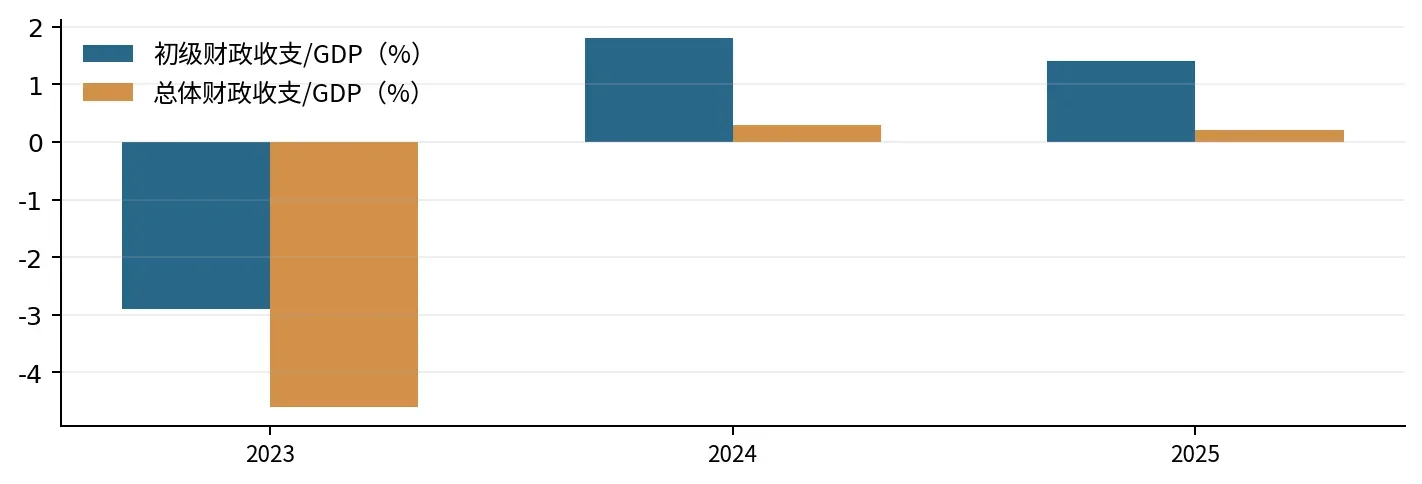
图1 财政收支变化(IMF及历史财政统计)
《五月公约》:从破除殖官主义走向重建组织信托
2024年3月1日,米莱向各省及布宜诺斯艾利斯自治市发出缔约倡议,原拟于5月25日签署。经过立法与联邦协商,7月9日独立纪念日,他与17个省的省长及自治市行政首长在图库曼签署公约。此前《基础法》及财政措施法的通过,为协议奠定了法律条件〔ⅩⅨ—ⅩⅩ〕。正式签署文本纳入教育原则。以下按正式版本概述十大原则,并从共生经济学角度辨识其制度含义。
表3 《五月公约》与共生经济学的关联
| 《五月公约》原则(概述) | 共生经济学的制度诠释 |
| 1. 私有产权不可侵犯 | 保障个人对自身资源的自主支配与契约选择。 |
| 2. 坚持财政平衡 | 约束向纳税人及未来世代转嫁成本。 |
| 3. 公共支出降至GDP约25% | 以数量目标约束扩张,再以净效能辨识哪些支出应减、应保、应增。 |
| 4. 保障基础教育、充分识字并防止辍学 | 将生命成长与创造能力置于改革的建设目标。 |
| 5. 减轻税负、简化税制、促进贸易 | 降低制度性成本,为个人和企业赋能。 |
| 6. 重新商议联邦税收分享 | 重建联邦与地方的权责、财政与服务关系。 |
| 7. 各省推进自然资源开发 | 将地方资源优势转化为产业和社区生活效能。 |
| 8. 劳动制度现代化、促进正规就业 | 扩大自主协作机会,保障劳动契约。 |
| 9. 可持续养老、尊重缴费者并允许私人选择 | 重建跨代信托,使缴费权益与责任承兑相连接。 |
| 10. 开放国际贸易 | 增加跨国有效连接,以生活净效能检验开放成果。 |
公约尤其值得重视的是其形成方式:中央政府必须与地方政府协商,资源开发、税收分享、劳动及养老改革牵涉不同主体的权利和责任。以共同约定来约束权力、协调利益,提供了从行政命令走向组织信托的制度入口。它是一项政治协议,具体承兑仍须经过立法、实施与监督。
第二阶段:2025年——释放社会财富创造能力
2025年逐步放宽部分外汇管制,简化贸易及行政程序。IMF记录2025年初级财政盈余为GDP的1.4%,总体现金盈余0.2%;下半年贫困率降至28.2%〔Ⅰ〕。与此同时,依据2024年第617号法令设立的五月委员会(Consejo de Mayo)于2025年启动工作,将公约原则转化为政策及立法建议。
委员会纳入行政、地方、国会、工会及工商组织代表。其报告提出财政货币稳定、劳动现代化和教育等方面的建议,同时明确联邦税收分享与养老金改革尚未纳入具体分析〔ⅩⅪ—ⅩⅫ〕。这提示我们:制度协商已经开始,跨主体承兑仍有待推进。
第三阶段:2026年——从制度性降本走向综合效能承兑
米莱改革进入第三年,其历史性意义正在从财政货币秩序的修复,拓展到个人、家庭、社区和企业自主创造空间的释放。《五月公约》的逐步落实,将使改革从破除殖官主义的制度性障碍,走向重建组织信托与创造有效连接。共生经济学所要检验的,正是这一转变能否通过降本(C)、赋能(E)、健康(H)、信任(T)、和平(P)五因指数的相应相辅相成,提升生产、生活、生態与生命的综合净效能。住房租赁与能源产业的改革实践,为我们提供了两个具体的观察窗口。
七、两个具体案例:从解除管控到创造有效连接
案例一:住房租赁改革——释放存量资源
2023年12月,阿根廷取消住房租赁法律中的多项强制规定。埃尔费特(Martin Elfert)和托姆森(Stephan L. Thomsen)2025年的研究利用2023—2024年每周数据,发现解禁后出租住房供应恢复、租金下降;长期效果仍需观察〔Ⅶ〕。
没有立即建造大量新房,仅通过改变房东与租户之间的连接条件,就使部分既有住房重新进入生活。共生经济学由此辨识制度性成本:增加有效连接,本身就是财富创造。这对于加拿大住房问题具有研究意义。
这一案例对应公约的产权与契约原则。下一步可从租赁信息透明、低成本争议解决与社区互助入手,检验自主协商能否持续改善居住成本与质量。

图2 住房租赁改革的效能路径
案例二:能源产业——三次价值跃升
瓦卡穆埃尔塔(Vaca Muerta)的页岩油气开发是多届政府、企业、技术人员和基础设施投资者的累积成果。BBVA报告称2025年能源贸易盈余达79亿美元,预测2026年为136亿美元〔Ⅷ〕。后者是预测值。
第一次跃升,把资源转化为能源;第二次跃升,把能源转化为技术创新、产业竞争力和财富创造优势;第三次跃升,把产业财富转化为就业、收入、健康、教育与生態质量。这与《共生加拿大》提出的能源产业课题相呼应。
这一案例对应公约第七及第十项。地方资源开发和开放贸易能够拓展产业机会,第三次价值跃升则有赖于社区参与、透明收益安排、职业培训及环境责任。
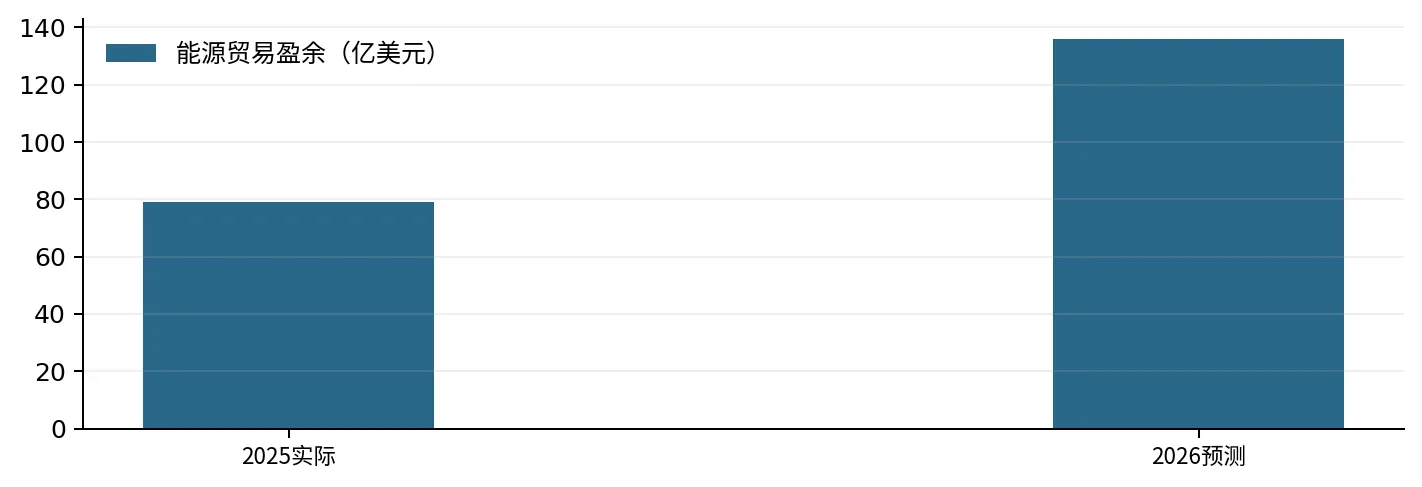
图3 能源贸易盈余(BBVA Research,预测与实际分列)
八、从GDP走向GDE:以五因指数检验改革
国内共生净效能(GDE)旨在辨识经济活动的正效能、零效能和负效能。增加机构与财政拨款可能增加GDP,却未必增加GDE;削减无效审批可能减少部分GDP,却增加生活效能。
GDE = Σ (GDP? × η?) η? = GDE? / GDP?
以公约第三项为例,公共支出占GDP的25%是财政数量目标。GDE进一步追问每项支出产生多少净效能:取消无效审批可能减少GDP而增加GDE;必要的教育与社区医疗投入则可能同时增加二者。效能系数η须依据可观测成本、收益及外部影响核算,避免成本转嫁和重复计量。
降本(C):辨识财政、行政、交易及通胀成本的减少,以六大资产(资源)负债表追踪成本归属。
赋能(E):解除不合理管制,释放存量资源,增加就业、创业及自主协作机会。
健康(H):以营养、医疗可及性、居住质量和生態质量检验改革对生命的实际贡献。
信任(T):稳定货币、契约与政策预期;决策有记录、组织有责任、政策有评价、失职可追究。
和平(P):通过法律、契约、协商及民主纠错,降低冲突成本,使不同主体在间道竞和中获得发展空间。
表4 共生经济学观测框架
| 五因指数 | 已有观察 | 生活基准 |
| 降本 C | 财政、通胀、去管制 | 家庭与企业综合成本 |
| 赋能 E | 投资、存量资源释放 | 就业、实际工资、创业 |
| 健康 H | 定向援助 | 营养、医疗、生態 |
| 信任 T | 财政约束、审计 | 契约、决策问责 |
| 和平 P | 立法与协商 | 社会冲突成本、安全 |
五因指数的量化须以可追踪的生活基准为依据。
五因指数应进入公约的事前方案比较、实施中的校准及事后评估,使财政纪律、产权保障、教育、就业及养老承诺获得可追踪的承兑尺度。
九、终结决策免责权:好处自己拿,成本留给别人
殖官主义何以能够跨意识形態、跨时空癌变式繁衍?好处自己拿,成本留给别人!这就是决策免责权的要害:决策权、收益权与成本承担的结构性分离。
在《殖官主义:享受决策的好处,把代价留给他人》一文中,我已经指出,国家并非无主的损失账户。政治组织获得选票,纳税人支付费用;决策者收获政绩,后代偿还债务。即使决策符合既有程序,也可能借制度之名转嫁成本。〔Ⅺ〕
2026年4月22日,米莱政府提出取消由国家财政承担的强制性初选制度(PASO)。据总统府声明,2023年这一机制耗费约450亿比索。政党内部选拔候选人的费用,为什么要全体纳税人承担?这项改革提案直接触及政治组织的收益与成本承担关系。〔Ⅺ〕
殖官主义的癌变还在于:转嫁成本造成危机,危机成为扩权理由,扩权又带来新的组织收益和新的成本转嫁。问题越多,某些组织反而越有理由增加预算与权力。从解决问题蜕变为经营问题,正是这一利益机制的结果。
共生经济学提出自然、家庭、社区、企业、政府、社会(诚信)六大资产(资源)负债表,交叉追踪每项经济行为的收益归属和成本负载。财政账上的节约若变成家庭账上的负担,就必须重新核算其净效能。六大表使隐匿、转移和递延的成本得以辨识。
《五月公约》的财政纪律、产权保护及联邦税收分享原则,为重新界定权责提供了制度入口。在此基础上,应建立公共决策全生命周期追踪与责任承兑制:公开授权、决策依据、受益者、成本承担者及实际效能;奖励贡献,及时纠错,依法追究违法失职责任,并保护合理探索。
谁拥有决策权,谁就应承担与之相称的责任;谁受生命之托,谁就必须向生命承兑。

图4 公共决策全生命周期追踪与责任承兑制
十、从阿根廷到联合国:终结殖官主义的世界性课题
米莱的电锯只适用于阿根廷吗?2025年9月24日,他在第80届联合国大会上批判国际组织偏离受托使命,提出回归核心使命、国际辅助性、机构勤勉与效能、规范简化与合理化四项改革原则。〔Ⅻ〕
这四项原则与《五月公约》具有内在联系:约束组织的权力边界,尊重各主体的自主权利,削减无效组织消耗,使公共资源回到受托使命。国际辅助性原则尤其重要,它要求国际组织尊重国家及其社会自主处理事务的空间。
2026年9月23日,米莱再次在联合国大会上批判联合国未能充分履行应有使命,却不断扩大干预各国社会生活的官僚职能。〔ⅩⅩⅢ〕该做的不做,不该做的却越做越多;受托使命日益虚化,组织权力不断扩张。这是殖官主义跨国界繁衍的现实问题。
人类需要国际合作,需要共同守约的组织。国际组织的价值在于降低跨国协作成本、增进信任、维护和平。以降本、赋能、健康、信任、和平五因指数检验其实际承兑,才能把国际组织的预算、权限与存在理由重新联系起来。
从社区到国家,从国家到国际社会,公寓于私,众私即公;普遍寓于特殊。公共组织受生命之托。米莱从国内电锯改革、《五月公约》到联合国改革的主张,使终结殖官主义、重建组织信托成为一个世界性的现实课题。这也是我称米莱为“反殖官主义英雄”的理由。
十一、从电锯到公约:从K诊走向Q疗
电锯与公约在2024年已经同时展开,破与立相互依存。共生经济学的Q疗进一步追问:如何让这些制度承诺落实为个人与社区自主连接的真实条件?
Q疗既非把K型分化强行拉平,也非将社会封闭成O型循环。它要开拓新的有效连接,使不同生命主体拥有更多创造与协作的可能。
首先,从公约的产权、教育、劳动原则出发,建设家庭和社区自主协作的条件。将政府退出不必要管控后释放的空间交给个人、企业及自愿组织;以法治、契约保障和必要公共服务托举这些连接。
其次,以公约十大原则建立公开的承兑账本,将联邦与地方的授权、预算、责任主体、实施进度和生活基准逐项对应,使家庭、社区与企业能够参与评价、申诉和纠错。
再次,创建共生标准(Symbiotic Standards),以η为过滤机制,以五因指数为衡量工具,从住房、能源、医疗、教育等社区生活领域开展可比较的效能观测。将实测结果反馈到预算、监管和公共服务方案的选择之中,使改革拥有持续校准的能力。

图5 K诊与Q疗的机制示意
十二、从阿根廷遥望加拿大
加拿大与阿根廷拥有辽阔土地、丰富资源、多元移民文化及联邦制架构。资源优势如何转化为产业优势,再向生命承兑,是共同的课题。
我希望通过实地考察、人物交流和生活体验,听听出租车司机、餐馆老板、商店经营者、教师、退休老人、年轻创业者及普通家庭怎样评价这三年的变化。他们的收入增加了吗?生活成本下降了吗?创业更加容易了吗?对未来更加有信心了吗?这些具体生命的真实变化,才是共生经济学需要悉心采集的生活数据。
两国都是联邦制国家。《五月公约》所提出的联邦与地方财政关系尤其值得与加拿大经验对照研究:如何使资源配置、公共服务责任及地方自主权相互契合?这可以成为两国探索共生标准的共同课题。
十三、阿根廷,我期待与你一路同行!
今天,我刚刚踏上阿根廷的土地。我期待看到《五月公约》的承诺一步步落实到普通人的生活之中。
电锯清除无效组织消耗,《五月公约》开拓重建组织信托的制度路径。
全部历史的第一个前提,是个人生命自组织连接的存在。
公寓于私,众私即公;普遍寓于特殊。
万物有序,唯生命具足而超序,万事交互主体共生且生生不息。
阿根廷,我来了! Argentina, Here I Am!
All for Life!

主要参考文献及数据来源
Ⅰ. IMF. Argentina: 2026 Article IV Consultation and Second Review. May 2026. https://www.elibrary.imf.org/view/journals/002/2026/105/article-A001-en.xml
Ⅱ. Virginia Postrel. The Future and Its Enemies. 1998.
Ⅴ. Hoover Institution. The Market Is Ourselves. 2024-05-29. https://www.hoover.org/news/market-ourselves-argentine-president-milei-explains-his-approach-freedom-hoover
Ⅶ. Elfert & Thomsen. The Impact of the Chainsaw-Liberation on the Rental Housing Market in Buenos Aires. IZA DP 18107, 2025. https://ideas.repec.org/p/iza/izadps/dp18107.html
Ⅷ. BBVA Research. Argentina | Oil and Gas Outlook 2026. https://www.bbvaresearch.com/en/publicaciones/argentina-oil-and-gas-outlook-2026/
Ⅺ. 钱宏:《殖官主义:享受决策的好处,把代价留给他人》,2026年10月8日。https://www.ai-am.org/article/10338
Ⅻ. Argentina, Presidencia. Discurso del Presidente Javier Milei en la 80? sesión de la Asamblea General de la ONU, 2025-09-24. https://www.casarosada.gob.ar/informacion/discursos/51081-discurso-del-presidente-de-la-nacion-javier-milei-en-la80-sesion-de-la-asamblea-general-de-la-onu-nueva-york
ⅩⅢ. INDEC. https://www.indec.gob.ar/
ⅩⅣ. Ludwig von Mises. Human Action. 1949.
ⅩⅤ. F. A. Hayek. The Use of Knowledge in Society. 1945.
ⅩⅥ. Murray Rothbard. For a New Liberty. 1973.
ⅩⅦ. 钱宏:《共生经济学概论(修订版)》,2026。
ⅩⅧ. 钱宏:《共生加拿大》,2026年写作稿。
ⅩⅨ. Argentina, Presidencia. Comunicado Oficial Número 26, 1 March 2024. https://www.argentina.gob.ar/node/423851
ⅩⅩ. Argentina. Informe 141 al Senado, pregunta 15 (Pacto de Mayo). https://www.argentina.gob.ar/sites/default/files/informe_141_-_hsn.pdf
ⅩⅪ. Argentina. Decreto 617/2024, Consejo de Mayo; Decreto 382/2025. https://www.argentina.gob.ar/normativa/nacional/decreto-617-2024-401587/actualizacion
ⅩⅫ. Consejo de Mayo. Recomendaciones y Propuestas. https://www.argentina.gob.ar/sites/default/files/informe_consejo_de_mayo.pdf
ⅩⅩⅢ. Javier Milei. Intervención ante el 81? período de sesiones de la Asamblea General de las Naciones Unidas, 2026-09-23.
Argentina, Here I Am!
— Who Wants Milei’s Chainsaw to Fail? From the Cross-Ideological Proliferation of Bureaucolonialism to the Empirical Test of Symbionomics
Archer Hong Qian(钱宏)
November 25, 2026, Buenos Aires, Argentina

Abstract
Who, exactly, is the target of Milei’s chainsaw? Why do some people around the world hope he will succeed, while others are eager to see him fail? To which school of economic thought do Milei’s reforms belong? They appear to have something in common with each of the following:
Austrian School of Economics (intellectual origins): Individual action and spontaneous order.
Anarcho-Capitalism (personal political and economic philosophy): Private property rights, voluntary contracts, and limits on state power.
Monetarism (macroeconomic policy instruments): Monetary stability and inflation control.
Neoliberalism (a common external theoretical classification): Market opening, privatization, and deregulation.
Ordoliberalism (an analytical perspective on institutional conditions): Legal order and the rules of competition.
Shock Therapy (certain methods of reform implementation): Rapid fiscal adjustment and structural reform.
Keynesianism (a critical perspective on fiscal austerity): Aggregate demand, employment, and business cycles.
Why, then, does none of these fully capture the nature of Milei’s reforms? Because none of the above theories or policy paradigms adequately reveals the cross-ideological mechanisms of organizational reproduction that his reforms confront, nor do they integrate the fundamental objectives of reform—revitalizing the self-organizing connectivity of individuals and communities, rebuilding organizational trust, and enhancing society’s overall net effectiveness—into a coherent new economic paradigm.
Examining Milei’s nearly three years of reform through the lens of Symbionomics enables us to transcend the century-long pendulum of ideological disputes between capitalism and socialism, market freedom and government control, growth and distribution priorities, the public and the private, and the political left and right. It reveals the cancer-like organizational proliferation of Bureaucolonialism across ideologies, time, and space, as well as its underlying institutional foundation—the privilege of decision-making without accountability.
From the chainsaw reforms to the May Pact (Pacto de Mayo), Argentina has embarked on an institutional exploration that moves from dismantling Bureaucolonialism toward rebuilding organizational trust.
Drawing on empirical data and representative case studies, this article applies the theoretical perspectives and methodology of Symbionomics to explore how human economic activity can advance from GDP to GDE, from K-Diagnosis to Q-Therapy, from reducing wasteful organizational consumption to unleashing the vitality of life’s self-organizing connectivity, and from decision traceability and accountability to the rebuilding of organizational trust.
Beyond the chainsaw, what should be built? How should it be built? Can Argentina make a fresh start?
Argentina’s exploration concerns both the future of a nation and a defining global challenge of our time—rebuilding organizational trust.
I. Arriving in Argentina with Several Questions
Today, I arrived in Buenos Aires, the capital of Argentina. Once celebrated as the “Paris of South America,” this city has a history spanning nearly five centuries. It deserves to be explored at an unhurried pace and appreciated in all its richness. For now, however, I am in no hurry to write about Argentina’s history.
What particularly draws me here is an economist who entered the political arena wielding a chainsaw—Javier Milei. Three years ago, he embarked on a national reform that attracted worldwide attention. Some hope for his success, others observe with detachment, and still others regard his success or failure as a contest between competing ideologies.
Yet focusing exclusively on Milei’s chainsaw would mean overlooking the May Pact, which he proposed and signed in 2024. One addresses what must be dismantled; the other addresses what must be built together. Only by considering these two initiatives in conjunction can we appreciate the full significance of his reforms.
In 2026, I completed the revised edition of Symbionomics: An Overview and have been working on Symbiotic Canada: From Diversity and Ecology to a New Order of Intersubjective Symbiosis through Mutual Alignment.
It is with the questions explored in these two books that I have come to Argentina.
II. Why Argentina? Why Milei? Why Now?
1. Domestic Background: A Century-Long Predicament in a Resource-Rich Nation
In the early twentieth century, Argentina ranked among the world’s wealthier nations. The Pampas grasslands, European immigration, railways and ports, and global trade in agricultural and livestock products together created a golden age.
Over the following century, however, military coups, economic nationalism, sovereign debt defaults, currency depreciation, and recurring recessions became intertwined.
Juan Perón was elected president in 1946, making social justice, labor rights, and industrial protection central policy priorities. In the 1990s, Carlos Menem pursued privatization and pegged the peso to the US dollar, yet these measures failed to prevent the crisis of 2001.
The Kirchner era saw renewed state intervention. Between 2015 and 2019, Mauricio Macri attempted gradual reforms but encountered another debt and currency crisis. In 2018 and 2022, the International Monetary Fund (IMF) provided large-scale financing. A severe drought in 2023 further undermined agricultural exports.
From Perón to Menem, and from the Kirchners to Macri, state intervention and market freedom alternated as the dominant policy priorities.
Why did fiscal and monetary crises repeatedly emerge despite successive changes in ownership structures, distribution mechanisms, and political leadership?
We need to redirect our attention from the left-right policy pendulum to the relationships among organizational power, resource control, and the fulfillment of entrusted responsibilities.
Table 1. Argentina’s Economic Conditions When Milei Took Office (Historical Statistics from INDEC and the IMF)
| Indicator | 2023 |
|---|---|
| Year-end annual inflation rate | 211.4% |
| Monthly inflation in December | 25.5% |
| Urban poverty rate in the second half of the year | 41.7% |
| Overall fiscal deficit as a percentage of GDP | Approximately 4.6% |
2. International Background: Reconsidering the Relationship Between Government and Society
Following the 2008 financial crisis and the 2020 pandemic, governments in many countries expanded fiscal and monetary intervention, bringing problems of debt, inflation, and the cost of living into sharper focus.
Who ultimately bears the additional costs arising from the expansion of government organizations?
Against an international backdrop in which industrial subsidies and trade protection have regained prominence, Milei’s deregulation reforms offer an alternative practical approach.
In April 2025, the IMF approved a four-year, US$20 billion financing program for Argentina. Its May 2026 assessment acknowledged progress in fiscal stabilization and deregulation. [I]
III. Who Is Waiting for Milei’s Chainsaw to Fail?
In The Future and Its Enemies, Virginia Postrel examines the conflict between open, evolving social orders and forces seeking to control existing arrangements. Her analysis provides an intellectual reference for understanding resistance to reform. [II]
The first group consists of interest-based organizations that derive special benefits from existing administrative licensing, concessions, fiscal subsidies, and trade protection.
Reform may threaten their resources and institutional standing. If society can continue to function effectively after unnecessary approvals and privileges are abolished, these organizations must demonstrate their public value anew.
The second group consists of political forces that derive benefits from established political and economic organizational networks.
Trade unions cannot simply be equated with workers, political parties with voters, or governments with the people. The interests of entrusted organizations do not automatically coincide with those of the people who entrust them.
The third group consists of those who treat established economic theories as unquestionable doctrines. The practical outcomes of Milei’s reforms will compel different economic theories to re-examine their assumptions and policy prescriptions.
The fourth group consists of political forces that interpret the success or failure of Argentina’s reforms as a victory or defeat in international ideological competition.
IV. To Which School Does Milei’s Reform Belong? Something in Common with All, Yet Fully Captured by None—An Interpretation from Symbionomics
Milei explicitly identifies with the Austrian School of Economics. Philosophically, he describes himself as an anarcho-capitalist, while in practical governance he identifies as a minarchist.
In his May 2024 address at the Hoover Institution, he clearly distinguished these different levels of his intellectual and political commitments. These affiliations should be acknowledged as matters of fact. [V]
However, Milei’s own intellectual affiliation and the theoretical framework through which we interpret his entire reform process are two distinct questions.
Table 2. Milei’s Reforms in Relation to Seven Schools of Economic Thought and Policy Paradigms
| Economic thought or policy paradigm | Relationship to Milei’s reforms | Principal theoretical and policy orientations |
|---|---|---|
| Austrian School of Economics | Intellectual origins | Individual action, dispersed knowledge, spontaneous order |
| Anarcho-Capitalism | Personal political and economic philosophy | Private property rights, voluntary contracts, limits on state power |
| Monetarism | Certain shared macroeconomic policy instruments | Monetary stability, inflation control |
| Neoliberalism | Common external theoretical classification | Market opening, privatization, deregulation |
| Ordoliberalism | Analytical perspective on institutional conditions | Legal order, rules of competition |
| Shock Therapy | Certain methods of reform implementation | Rapid fiscal adjustment and structural reform |
| Keynesianism | Critical perspective on fiscal austerity | Aggregate demand, employment, business cycles |
Why, then, does none of these fully capture the nature of Milei’s reforms?
Each of these theories and policy paradigms has its own historical background, central concerns, theoretical assumptions, and policy objectives. Yet none adequately reveals the cancer-like mechanisms through which Bureaucolonialism reproduces itself across ideologies, time, and space, or its underlying institutional foundation—the privilege of decision-making without accountability.
Symbionomics takes life itself as its fundamental point of departure.
The public inheres in the private; the multitude of private individuals constitutes the public.
Public value arises from the shared needs of concrete living individuals. Public and private ownership, markets and planning, growth and distribution must all be selected and calibrated according to their overall net effectiveness for life.
Symbionomics takes as its theoretical foundation the mutual correspondence and complementarity between the dynamic equilibrium of life’s self-organizing connectivity (kinetic energy) and intersubjective symbiosis (potential energy).
It integrates the revitalization of individual and community self-organizing connectivity, the rebuilding of organizational trust, and the enhancement of society’s overall net effectiveness.
In doing so, it transcends the century-long pendulum of ideological disputes between capitalism and socialism, market freedom and government control, growth and distribution priorities, the public and the private, and the political left and right.
V. Stripping Away the Masks of Ideology: Identifying Bureaucolonialism
Bureaucratic organizations can proliferate in capitalist countries, just as they can in socialist countries. Private enterprises may control resources through monopolies, while public institutions may control resources through administrative power.
Financial institutions may shift the costs of business failures onto taxpayers, while government agencies may transfer the costs of erroneous decisions onto ordinary households.
I conceptualize the self-reproduction of organizational power and resource-control capacity, the disconnection between organizational benefits and responsibility, and the continuous transfer of costs onto society as Bureaucolonialism (Reproductive Officialdom).
Bureaucolonialism exhibits cancer-like proliferation across ideologies, time, and space.
In the East, it may produce the recurring historical tragedy in which ordinary people suffer whether dynasties rise or fall. In the West, it may manifest itself through organizational breaches of trust, failures of duty, expansion, and erosion, even transforming organizations from problem-solvers into entities that perpetuate and exploit problems.
Why do certain problems receive funding year after year, lead to the establishment of new institutions year after year, and yet persist year after year?
When the existence of a problem becomes a condition for an organization to acquire resources and maintain power, that organization may lose its intrinsic motivation to solve the problem.
Milei’s chainsaw provides a practical entry point for identifying this mechanism.
VI. Let the Facts Speak: Three Stages of Milei’s Nearly Three Years of Reform
Stage One: Late 2023–2024—Stopping Fiscal Hemorrhage and Laying Institutional Foundations
Streamlining government institutions, reducing administrative expenditure and certain subsidies, and restricting the monetization of fiscal deficits were the principal initial measures of reform.
In 2024, Argentina achieved a primary fiscal surplus of approximately 1.8% of GDP and an overall fiscal surplus of approximately 0.3%. The government’s fiscal capacity once again became a binding constraint.
The prolonged practice of financing fiscal deficits through money creation erodes savings, wages, and pensions, producing a concealed mechanism of cost shifting.
During the same period, the economy contracted, and the poverty rate reached 52.9% in the first half of 2024. Stopping fiscal hemorrhage must therefore proceed alongside the establishment of new institutional arrangements.
Fiscal Balance as a Percentage of GDP
Primary fiscal balance
Overall fiscal balance
-6%-4%-2%0%2%202320242025
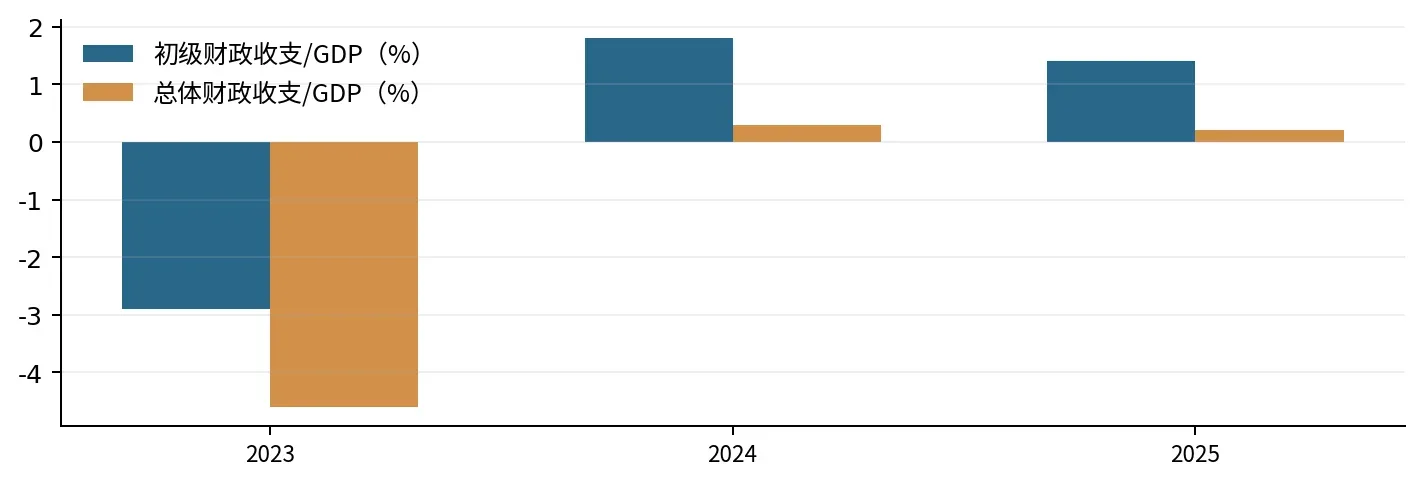
Figure 1. Changes in Fiscal Balance (IMF and Historical Fiscal Statistics)
The May Pact: From Dismantling Bureaucolonialism to Rebuilding Organizational Trust
On March 1, 2024, Milei invited Argentina’s provinces and the Autonomous City of Buenos Aires to enter into a national pact, originally scheduled to be signed on May 25.
Following legislative deliberations and federal negotiations, Milei signed the pact in Tucumán on July 9, Argentina’s Independence Day, together with the governors of seventeen provinces and the head of government of the Autonomous City of Buenos Aires.
The preceding passage of the Bases Law and fiscal measures legislation established the legal conditions for the agreement. [XIX–XX]
The final signed text incorporated an educational principle. The following table summarizes the ten principles of the official agreement and identifies their institutional significance from the perspective of Symbionomics.
Table 3. The May Pact and Its Relationship to Symbionomics
| Principles of the May Pact (Summary) | Institutional Interpretation from Symbionomics |
|---|---|
| 1. Inviolability of private property rights | Safeguarding individuals’ autonomy over their own resources and freedom of contractual choice. |
| 2. Commitment to fiscal balance | Restricting the transfer of costs onto taxpayers and future generations. |
| 3. Reduction of public expenditure to approximately 25% of GDP | Establishing a quantitative constraint on organizational expansion, while using net effectiveness to determine which expenditures should be reduced, maintained, or increased. |
| 4. Guaranteeing basic education, full literacy, and preventing school dropout | Placing human development and creative capacity among the constructive objectives of reform. |
| 5. Reducing the tax burden, simplifying taxation, and promoting trade | Reducing institutional costs and empowering individuals and enterprises. |
| 6. Renegotiating federal tax revenue sharing | Rebuilding relationships among federal and provincial powers, responsibilities, finances, and public services. |
| 7. Promoting provincial development of natural resources | Transforming local resource advantages into industrial capabilities and improved community living effectiveness. |
| 8. Modernizing labor institutions and promoting formal employment | Expanding opportunities for autonomous cooperation and safeguarding employment contracts. |
| 9. Establishing a sustainable pension system, respecting contributors, and allowing private alternatives | Rebuilding intergenerational trust by connecting contributors’ entitlements with the fulfillment of responsibilities. |
| 10. Opening international trade | Expanding effective cross-border connectivity and evaluating the outcomes of openness through net effectiveness for life. |
What deserves particular attention is the manner in which the pact was formed.
The central government must negotiate with provincial governments. Resource development, tax revenue sharing, labor reform, and pension reform involve the rights and responsibilities of different subjects.
Constraining power and coordinating interests through mutually agreed commitments provides an institutional pathway from administrative commands toward organizational trust.
The May Pact is a political agreement. The fulfillment of its specific commitments still requires legislation, implementation, and oversight.
Stage Two: 2025—Unleashing Society’s Wealth-Creation Capacity
In 2025, certain foreign exchange controls were gradually relaxed, while trade and administrative procedures were simplified.
According to IMF records, Argentina achieved a primary fiscal surplus equivalent to 1.4% of GDP and an overall cash surplus of 0.2% in 2025. The poverty rate declined to 28.2% in the second half of the year. [I]
Meanwhile, the May Council (Consejo de Mayo), established under Decree No. 617 of 2024, commenced its work in 2025, translating the principles of the pact into policy and legislative recommendations.
The council incorporates representatives from the executive branch, provincial governments, Congress, trade unions, and business organizations.
Its report presents recommendations concerning fiscal and monetary stability, labor modernization, and education, while explicitly acknowledging that federal tax revenue sharing and pension reform had not yet been incorporated into its detailed analysis. [XXI–XXII]
This indicates that institutional negotiation has begun, while the fulfillment of commitments across different subjects remains a task to be advanced.
Stage Three: 2026—From Institutional Cost Reduction to the Realization of Overall Net Effectiveness
As Milei’s reforms enter their third year, their historical significance is expanding from the restoration of fiscal and monetary order toward the liberation of creative autonomy among individuals, families, communities, and enterprises.
The gradual implementation of the May Pact will advance reform from dismantling the institutional barriers of Bureaucolonialism toward rebuilding organizational trust and creating effective connectivity.
What Symbionomics seeks to examine is whether this transition can enhance the overall net effectiveness of production, living, ecology, and life through the mutual correspondence and complementarity of the Five-Factor Index:
Cost Reduction (C), Empowerment (E), Health (H), Trust (T), and Peace (P).
Reform practices in the rental housing market and the energy industry provide two concrete windows through which to examine this transition.
VII. Two Concrete Cases: From Removing Restrictions to Creating Effective Connectivity
Case One: Rental Housing Reform—Unlocking Existing Resources
In December 2023, Argentina abolished several mandatory provisions governing rental housing.
A 2025 study by Martin Elfert and Stephan L. Thomsen, drawing on weekly data from 2023 and 2024, found that rental housing supply recovered and rents declined following deregulation. The longer-term effects remain to be observed. [VII]
Without immediately constructing large numbers of new homes, a change in the conditions governing connectivity between landlords and tenants enabled some existing housing resources to return to active use.
Symbionomics identifies the institutional costs involved in this process:
Increasing effective connectivity is itself a form of wealth creation.
This has important implications for research into Canada’s housing problems.
The case corresponds to the May Pact’s principles of property rights and contractual freedom.
The next step is to examine whether autonomous negotiation can continuously improve housing affordability and quality through transparent rental information, low-cost dispute resolution, and mutual assistance within communities.
Existing Housing Stock
Identify Market Withdrawal and Transaction Costs Caused by Regulation
K-Diagnosis
Autonomous Negotiation and Contractual Safeguards
Q-Therapy
Restore Effective Supply and Evaluate Rental Costs and Housing Quality

Figure 2. The Effectiveness Pathway of Rental Housing Reform
Case Two: The Energy Industry—Three Leaps in Value Creation
The development of shale oil and gas in Vaca Muerta represents the cumulative achievements of successive governments, enterprises, technical professionals, and infrastructure investors.
According to BBVA Research, Argentina’s energy trade surplus reached US$7.9 billion in 2025 and is projected to reach US$13.6 billion in 2026. The latter figure is a forecast. [VIII]
The first leap transforms natural resources into energy.
The second leap transforms energy into advantages in technological innovation, industrial competitiveness, and wealth creation.
The third leap transforms industrial wealth into employment, income, health, education, and ecological quality.
These three leaps resonate with the energy industry issues explored in Symbiotic Canada.
This case corresponds to the seventh and tenth principles of the May Pact. Provincial resource development and international trade openness can expand industrial opportunities, while the third leap in value creation depends on community participation, transparent arrangements for sharing benefits, vocational training, and environmental responsibility.
2025 actual
$7.9B
2026 forecast
$13.6B
$0$40亿$80亿$120亿$160亿2025 Actual2026 Forecast
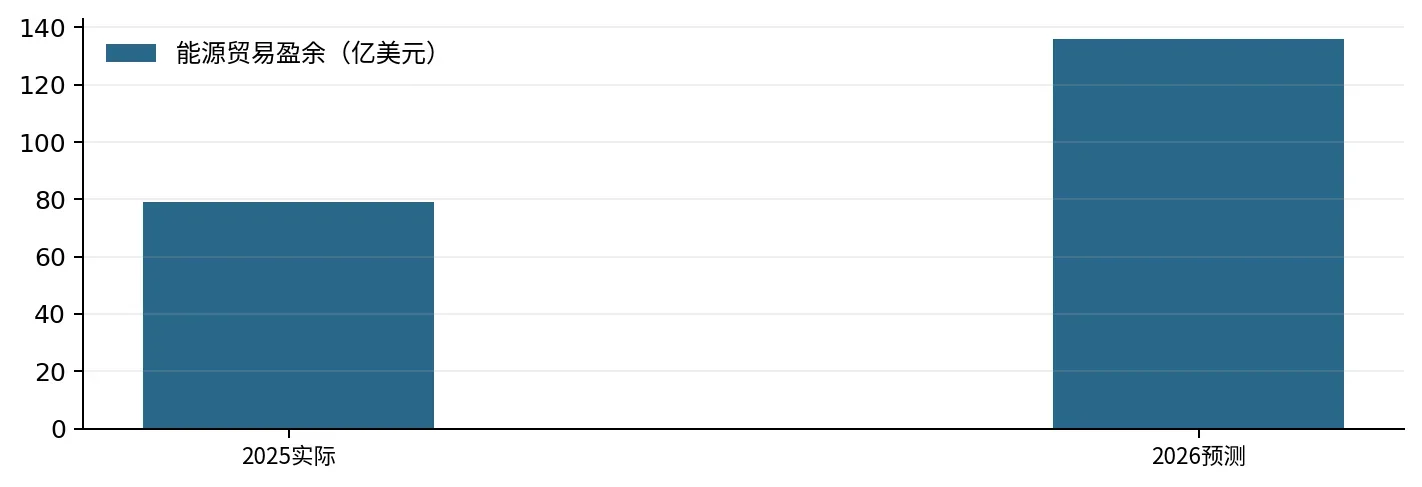
Figure 3. Energy Trade Surplus in US Dollars (BBVA Research; Actual and Forecast Values Distinguished)
VIII. From GDP to GDE: Evaluating Reform Through the Five-Factor Index
Gross Domestic Effectiveness (GDE), or domestic net symbiotic effectiveness, seeks to distinguish the positive, zero, and negative effectiveness of economic activities.
Expanding institutions and increasing fiscal appropriations may increase GDP without necessarily increasing GDE. Eliminating ineffective administrative approvals may reduce certain components of GDP while enhancing effectiveness for life.
\[ \mathrm{GDE}=\sum_i(\mathrm{GDP}_i\times\eta_i) \]
\[ \eta_i=\frac{\mathrm{GDE}_i}{\mathrm{GDP}_i} \]
Take the third principle of the May Pact as an example. Public expenditure equivalent to 25% of GDP constitutes a quantitative fiscal target.
GDE goes further by asking how much net effectiveness each expenditure produces.
Eliminating ineffective administrative approvals may reduce GDP while increasing GDE. Necessary investment in education and community healthcare, by contrast, may increase both.
The effectiveness coefficient η must be calculated on the basis of observable costs, benefits, and external impacts, avoiding cost shifting and double counting.
Cost Reduction (C): Identify reductions in fiscal, administrative, transaction, and inflation-related costs, and trace the allocation of these costs through the Six Major Asset (Resource) Balance Sheets.
Empowerment (E): Remove unreasonable restrictions, unlock existing resources, and expand opportunities for employment, entrepreneurship, and autonomous cooperation.
Health (H): Evaluate the actual contribution of reform to life through nutrition, healthcare accessibility, housing quality, and ecological quality.
Trust (T): Stabilize expectations concerning currency, contracts, and public policy. Decisions must be recorded, organizations must assume responsibility, policies must be evaluated, and failures of duty must be subject to accountability.
Peace (P): Reduce the costs of conflict through law, contracts, negotiation, and democratic mechanisms of error correction, enabling different subjects to develop through the interplay of competition and cooperation.

Table 4. The Symbionomics Evaluation Framework
| Five-Factor Index | Existing Areas of Observation | Life-Based Benchmarks |
|---|---|---|
| Cost Reduction (C) | Fiscal conditions, inflation, deregulation | Overall costs borne by households and enterprises |
| Empowerment (E) | Investment, unlocking existing resources | Employment, real wages, entrepreneurship |
| Health (H) | Targeted assistance | Nutrition, healthcare, ecology |
| Trust (T) | Fiscal constraints, auditing | Contracts, decision-making accountability |
| Peace (P) | Legislation and negotiation | Social conflict costs, security |
Quantification of the Five-Factor Index must be grounded in traceable life-based benchmarks.
The Five-Factor Index should be incorporated into the comparison of policy alternatives before implementation, calibration during implementation, and evaluation afterward.
This would establish traceable criteria for assessing the fulfillment of commitments concerning fiscal discipline, property rights, education, employment, and pensions under the May Pact.
IX. Ending the Privilege of Decision-Making Without Accountability: Taking the Benefits for Oneself and Leaving the Costs to Others
How does Bureaucolonialism achieve cancer-like proliferation across ideologies, time, and space?
By taking the benefits for oneself and leaving the costs to others!
This is the essence of the privilege of decision-making without accountability: the structural separation of decision-making power, entitlement to benefits, and responsibility for bearing costs.
In my article Bureaucolonialism: Enjoying the Benefits of Decisions While Leaving the Costs to Others, I have already pointed out that the state is no ownerless account into which losses can simply be deposited.
Political organizations gain votes while taxpayers pay the bills. Decision-makers claim political achievements while future generations repay the debts.
Even decisions that comply with established procedures may transfer costs onto others under the guise of institutional legitimacy. [XI]
On April 22, 2026, the Milei administration proposed abolishing the mandatory primary election system (PASO), which is financed by the state.
According to a statement from the Argentine presidency, this mechanism cost approximately 45 billion pesos in 2023.
Why should all taxpayers bear the cost of political parties selecting their own candidates?
This reform proposal directly addresses the relationship between the benefits enjoyed by political organizations and the costs they should bear. [XI]
The cancer-like character of Bureaucolonialism is further manifested in the following mechanism:
Cost shifting creates crises; crises become justifications for expanding power; expanded power generates new organizational benefits and further opportunities for cost shifting.
The more problems there are, the more justification certain organizations have for increasing their budgets and powers.
The transformation from solving problems to perpetuating and exploiting them is a direct consequence of this mechanism of vested interests.
Symbionomics proposes Six Major Asset (Resource) Balance Sheets:
Nature
Households
Communities
Enterprises
Government
Society (Integrity and Trustworthiness)
These six balance sheets cross-reference the distribution of benefits and the allocation of costs associated with each economic activity.
If savings recorded in government accounts become additional burdens in household accounts, their net effectiveness must be recalculated.
The six balance sheets enable concealed, transferred, and deferred costs to be identified.
The May Pact’s principles of fiscal discipline, property rights protection, and federal tax revenue sharing provide an institutional entry point for redefining powers and responsibilities.
On this basis, a system of full-life-cycle traceability and fulfillment of responsibility for public decisions should be established.
Authorization, decision-making grounds, beneficiaries, cost bearers, and actual effectiveness should be disclosed. Contributions should be rewarded, errors promptly corrected, unlawful conduct and failures of duty held accountable under the law, and legitimate exploration protected.
Whoever holds decision-making power must bear commensurate responsibility; whoever is entrusted by life must fulfill that trust to life.
Entrustment
Authorization and public needs
Decision-Making
Named decision-makers and comparison of alternatives
Ex Ante Evaluation
Costs, risks, and expected effectiveness
Implementation Tracking
Budgets, progress, and actual effectiveness
Independent Auditing
Identifying deviations, correcting errors, and enabling exit
Fulfillment of Responsibility
Rewarding contributions and enforcing legal accountability
Figure 4. Full-Life-Cycle Traceability and Fulfillment of Responsibility for Public Decisions
X. From Argentina to the United Nations: Ending Bureaucolonialism as a Global Challenge
Is Milei’s chainsaw applicable only to Argentina?
On September 24, 2025, addressing the 80th session of the United Nations General Assembly, Milei criticized international organizations for deviating from their entrusted missions and proposed four principles of reform:
A return to core missions.
International subsidiarity.
Institutional diligence and effectiveness.
Regulatory simplification and rationalization. [XII]
These four principles are intrinsically connected with the May Pact: constraining the boundaries of organizational power, respecting the autonomy of different subjects, reducing wasteful organizational consumption, and redirecting public resources toward their entrusted missions.
The principle of international subsidiarity is particularly important. It requires international organizations to respect the autonomy of nations and their societies in managing their own affairs.
On September 23, 2026, Milei again addressed the United Nations General Assembly, criticizing the organization for failing to adequately fulfill its proper mission while continuously expanding its bureaucratic functions in ways that interfere with the social lives of individual nations. [XXIII]
What should be done remains undone, while what should not be done continues to expand.
Entrusted missions become increasingly hollow, while organizational power continues to grow.
This is the real-world problem of Bureaucolonialism proliferating across national boundaries.
Humanity needs international cooperation and organizations committed to honoring shared agreements.
The value of international organizations lies in reducing the costs of cross-border cooperation, strengthening trust, and safeguarding peace.
Evaluating their actual fulfillment of entrusted responsibilities through the Five-Factor Index—Cost Reduction, Empowerment, Health, Trust, and Peace—makes it possible to reconnect their budgets and powers with the very reasons for their existence.
From communities to nations, and from nations to the international community:
The public inheres in the private; the multitude of private individuals constitutes the public. The universal inheres in the particular.
Public organizations are entrusted by life.
From his domestic chainsaw reforms and the May Pact to his proposals for United Nations reform, Milei has brought the task of ending Bureaucolonialism and rebuilding organizational trust into focus as a practical global challenge.
This is also why I call Milei an anti-Bureaucolonialism hero.
XI. From the Chainsaw to the Pact: From K-Diagnosis to Q-Therapy
The chainsaw reforms and the May Pact were already proceeding simultaneously in 2024. Dismantling and building are mutually dependent.
Q-Therapy in Symbionomics goes further by asking:
How can these institutional commitments be translated into real conditions that enable individuals and communities to establish autonomous connectivity?
Q-Therapy seeks neither to forcibly flatten K-shaped divergence nor to enclose society within an O-shaped cycle.
Its purpose is to open up new forms of effective connectivity, enabling different living subjects to enjoy greater opportunities for creativity and cooperation.
First, drawing on the May Pact’s principles concerning property rights, education, and labor, we should establish conditions for autonomous cooperation among families and communities.
The space liberated by the government’s withdrawal from unnecessary regulation should be entrusted to individuals, enterprises, and voluntary organizations. The rule of law, contractual safeguards, and necessary public services should support these connections.
Second, a publicly accessible ledger of fulfilled commitments should be established on the basis of the ten principles of the May Pact.
Federal and provincial authorizations, budgets, responsible subjects, implementation progress, and life-based benchmarks should be systematically correlated, enabling families, communities, and enterprises to participate in evaluation, appeals, and error correction.
Third, Symbiotic Standards should be established, employing the effectiveness coefficient η as a filtering mechanism and the Five-Factor Index as a measurement instrument.
Comparable effectiveness assessments should be conducted in areas of community life such as housing, energy, healthcare, and education.
The empirical results should then inform the selection of budgets, regulations, and public service arrangements, enabling reforms to acquire the capacity for continuous calibration.

Figure 5. The Mechanisms of K-Diagnosis and Q-Therapy
XII. Looking Toward Canada from Argentina
Canada and Argentina share vast territories, abundant natural resources, diverse immigrant cultures, and federal institutional structures.
How can resource advantages be transformed into industrial advantages and ultimately fulfilled in the service of life?
This is a challenge common to both countries.
Through field research, conversations, and everyday experiences, I hope to hear how taxi drivers, restaurant owners, shopkeepers, teachers, retirees, young entrepreneurs, and ordinary families evaluate the changes of the past three years.
Have their incomes increased?
Has their cost of living declined?
Has it become easier to start a business?
Do they have greater confidence in the future?
These real changes in the lives of concrete individuals constitute the life-based data that Symbionomics must carefully collect.
Both Canada and Argentina are federal nations.
The federal-provincial fiscal relationships proposed in the May Pact are particularly worthy of comparative study alongside Canada’s experience.
How can resource allocation, public service responsibilities, and local autonomy be brought into mutual alignment?
This could become a shared area of exploration for the development of Symbiotic Standards in both countries.
XIII. Argentina, I Look Forward to Journeying with You!
Today, I have just set foot on Argentine soil.
I look forward to seeing the commitments of the May Pact gradually fulfilled in the everyday lives of ordinary people.
The chainsaw removes wasteful organizational consumption; the May Pact opens an institutional pathway toward rebuilding organizational trust.
The first premise of all history is the existence of the self-organizing connectivity of individual life.
The public inheres in the private; the multitude of private individuals constitutes the public. The universal inheres in the particular.
All things possess order; life alone is intrinsically sufficient and transcends order. All things and affairs participate in intersubjective symbiosis, in the ceaseless renewal of life.
Argentina, Here I Am!
All for Life!
Principal References and Data Sources
I. International Monetary Fund (IMF). Argentina: 2026 Article IV Consultation and Second Review. May 2026.
https://www.elibrary.imf.org/view/journals/002/2026/105/article-A001-en.xml
II. Virginia Postrel. The Future and Its Enemies. 1998.
V. Hoover Institution. “The Market Is Ourselves: Argentine President Milei Explains His Approach to Freedom at Hoover.” May 29, 2024.
VII. Martin Elfert and Stephan L. Thomsen. The Impact of the Chainsaw-Liberation on the Rental Housing Market in Buenos Aires. IZA Discussion Paper No. 18107, 2025.
https://ideas.repec.org/p/iza/izadps/dp18107.html
VIII. BBVA Research. Argentina | Oil and Gas Outlook 2026.
https://www.bbvaresearch.com/en/publicaciones/argentina-oil-and-gas-outlook-2026/
XI. Archer Hong Qian. “Bureaucolonialism: Enjoying the Benefits of Decisions While Leaving the Costs to Others.” October 8, 2026.
https://www.ai-am.org/article/10338
XII. Presidency of Argentina. Address by President Javier Milei at the 80th Session of the United Nations General Assembly. September 24, 2025.
XIII. National Institute of Statistics and Censuses of Argentina (INDEC).
XIV. Ludwig von Mises. Human Action. 1949.
XV. Friedrich A. Hayek. “The Use of Knowledge in Society.” 1945.
XVI. Murray N. Rothbard. For a New Liberty. 1973.
XVII. Archer Hong Qian. Symbionomics: An Overview (Revised Edition). 2026.
XVIII. Archer Hong Qian. Symbiotic Canada. Manuscript, 2026.
XIX. Presidency of Argentina. Official Statement No. 26. March 1, 2024.
https://www.argentina.gob.ar/node/423851
XX. Argentina. Report No. 141 to the Senate, Question 15 (Pacto de Mayo).
https://www.argentina.gob.ar/sites/default/files/informe_141_-_hsn.pdf
XXI. Argentina. Decree No. 617/2024, May Council (Consejo de Mayo); Decree No. 382/2025.
https://www.argentina.gob.ar/normativa/nacional/decreto-617-2024-401587/actualizacion
XXII. May Council (Consejo de Mayo). Recommendations and Proposals.
https://www.argentina.gob.ar/sites/default/files/informe_consejo_de_mayo.pdf
XXIII. Javier Milei. Address at the 81st Session of the United Nations General Assembly. September 23, 2026.
几个核心术语统一如下:
| 中文 | 英文 |
|---|---|
| 共生经济学 | Symbionomics |
| 殖官主义 | Bureaucolonialism / Reproductive Officialdom |
| 决策免责权 | The Privilege of Decision-Making Without Accountability |
| 组织信托 | Organizational Trust |
| 责任承兑 | Fulfillment of Entrusted Responsibility |
| 生命自组织连接 | Life’s Self-Organizing Connectivity |
| 交互主体共生 | Intersubjective Symbiosis |
| 共生标准 | Symbiotic Standards |
| 五因指数 | Five-Factor Index |
| 生活基准 | Life-Based Benchmarks |
| 效能系数η | Effectiveness Coefficient η |
| K诊—Q疗 | K-Diagnosis—Q-Therapy |