
回答玉质先生
玉质先生:
抱歉,因为旅行,回复晚了。
这个题目我不熟悉,下面的回答也许是答非所问,但我尽力了。
Question 1: Non-integer sampling ratios: The sampling period is rarely an integer divisor of the signal period. In practice, an ideal integer N of samples per cycle does not exist.
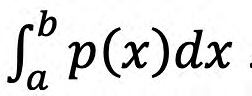
Answer: Assume we have N arbitrary sampling points, x1, x2 ……..xN. There is a unique polynomial p(x) of degree N-1 which interpolates these N points. The integral is then approximated by
Question 2: Zero-crossing misalignment: Sampled data points generally do not align precisely with the signal's zero-crossing points.
Answer: I do not understand your question well. If you mean x1 and xN above do not agree with a and b, which are zero crossing points of the function, then you can use the zeros of p(x) to determine a and b and
then use
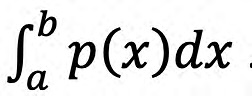 to approximate the integral.
Question 3: Dynamic signal periods: The actual signal period T fluctuates over time and must be measured continuously in real time.
Answer: Again, I do not understand your question well. If you are talking about what I indicated in question #2 above, then you can choose x1, x2 ……..xN to completely cover a cycle, that is, the point before x1 is of opposite sign as x1 and the point after xN is of opposite sign as xN , then compute the integral as indicated above. Two such cycles of opposite signs would then be a signal period.
Together, issues 1, 2, and 3 severely degrade integration accuracy.
4. The current solutions, such as FFT windowing, are highly CPU-intensive and impractical for real-time AC power monitoring.
Questions:
? Is there an existing time-domain solution available today?
Answer: Are my answers above a time-domain solution ?
? If it not exist, would you be interested in reviewing and improving a proposed real time solution?
Answer: I am not familiar with this topic enough.
