聪明累
聪明累
Cleverness Misled by Cleverness
——二元斗争与间道生新
— Binary Struggle and the Way-Between Giving Birth to the New
钱宏(Archer Hong Qian)
2026年9月3日晨于Vancouver
谨以此文献给每一位致力于:创建一个共生加拿大的男人、女人和孩子们!
Dedicated to every man, woman, and child committed to building a symbiotic Canada!
米开朗琪罗面对一块大理石,看见的不是石头,而是藏在石头里面的生命。
据说有人问他,怎样才能雕刻出那么美的人体?回答大意是:雕像本来就在里面,我只是把多余的石头去掉。
我喜欢把它说成八个字:
涤除冗余,彰显新美。
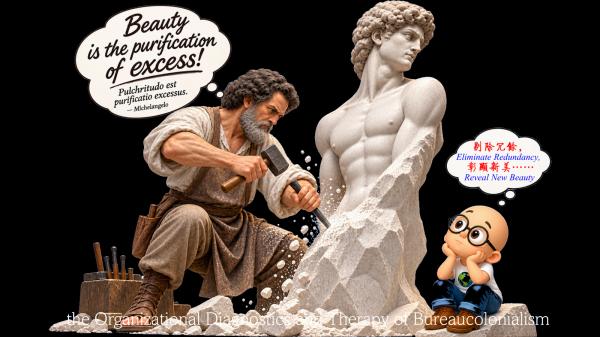
这也是我理解米莱“电锯改革”的一个切入点。
如果电锯只是为了砍机构、砍人员、砍预算,那不过是一把财政工具。真正值得关注的是:那些层层叠叠的机构、程序、规制和组织成本被涤除以后,被遮蔽的生命能不能重新显现?家庭、企业、社会能不能重新获得自组织的空间?一个个Mind能不能重新发生、重新连接、重新创造?
石头不是目的,大卫才是。
组织不是目的,生命才是。
涤除冗余,是为生命让路;彰显新美,是让生命重新发生。
可是,人类还有另外一种非常古老、也非常诱人的“聪明”。
《红楼梦》里的王熙凤说:
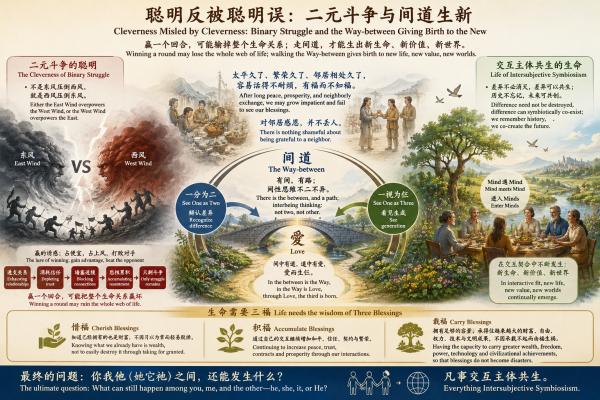
“不是东风压倒西风,就是西风压倒东风。”
这话聪明不聪明?
太聪明了。
王熙凤本来就是一个聪明绝顶的人。她善于看人,善于算账,善于判断强弱,善于抓住机会,更善于在复杂的人际关系中赢下一局又一局。
问题恰恰在这里:
她真的赢过,而且赢过很多次。
所以这种聪明才特别容易让人上瘾。
赢了一次,证明我的判断是对的;再赢一次,证明我的方法是对的;一路赢下去,便觉得自己的世界观也是对的。
《红楼梦》却偏偏又给这种聪明留下了另一句话:
“机关算尽太聪明,反算了卿卿性命。”
聪明为什么反过来误了聪明?
因为一个人可以把一个回合算得极其精明,却把整个生命关系算丢了。
王熙凤赢过多少回合?那些胜负最后挽救贾府了吗?一个人可以压倒另一个人,一个派别可以压倒另一个派别,一件事情可以摆平,一场斗争可以获胜;可是,如果每一次胜利都在消耗关系、透支孞托、堵塞连接,赢到最后又剩下什么?
“落了片白茫茫大地真干净。”
历史上这样的“聪明”,实在不少。
北宋与辽签订澶渊之盟以后,维持了一百多年的和平。双方做生意,边境贸易不断发生。宋朝的茶叶、瓷器、丝绸等商品进入辽境,贸易又使财富流回来。
可是燕云十六州总像一根刺。
宋徽宗君臣不爽。
于是想出了一个很聪明的办法:
联金灭辽。
辽是敌人,金也是辽的敌人。敌人的敌人,不就是朋友吗?
海上之盟,南北夹击。
结果呢?
还真赢了。
辽灭亡了。
念念不忘的燕京也终于有机会回来了。
问题偏偏发生在赢了以后。
维持百余年的宋辽关系没有了,原来的缓冲空间没有了,一个更加强大的金直接站到了宋朝门口。战争还顺便把北宋自己的军事虚弱、组织低效暴露给了这个新邻居。
一个目标实现了,整个关系结构却被赢坏了。
这才叫聪明反被聪明误。
聪明的人容易赢,赢惯了的人,也容易活得不耐烦。
活得不耐烦,往往不是因为没有福,而是有福而不知福,不惜福。
澶渊之盟以后百余年的和平、贸易与连接,本来就是福。太平久了,觉得太平平淡;繁荣久了,觉得繁荣还不够;已经拥有可以长期承兑的关系,却总想再多拿一点、再赢一点、再占一点上风。于是,太平得不耐烦,繁荣得不耐烦,原本已经拥有的福,反而成了最容易被挥霍的东西。
人尤其容易对身边已经拥有的好处失去感觉。和平久了,便忘了和平也是财富;往来久了,便把彼此提供的方便当成理所当然;邻居相处久了,甚至会觉得承认对方给自己的生活带来过价值,好像就是示弱。
其实,对邻居感恩,并不丢人。
感谢邻居,不等于低人一等;承认彼此需要,也不等于失去自主。恰恰因为长期相处、彼此往来,许多和平、便利、贸易、连接与孞托已经进入日常,久而久之,人反倒容易忘记:这些习以为常的东西,本身就是福。
太平得不耐烦,繁荣得不耐烦,邻居相处久了也会得不耐烦。于是,只看见眼前哪里“吃亏”,却忘了长期相处中彼此已经共同积累起来的福。
有福而不知福,才容易把福折腾掉。
所以,生命还需要三种智慧:
惜福、积福、载福。
惜福,是知道已经拥有的也是财富,不因习以为常而轻易毁掉;积福,是不只消费前人留下的和平、孞托、契约与繁荣,还要通过自己的交互继续增加它;载福,则是让生命、组织乃至国家拥有足够的容量,承得住越来越大的财富、自由、权力、技术与文明成果,不因承载不起而由福生祸。
惜已经发生之福,积交互生成之福,载生命共生之福。
两宋的教训正在这里:问题并不是没有福,恰恰是太平得不耐烦、繁荣得不耐烦,有福而不知道惜福。联金灭辽,赢了一个回合,却把百余年积下来的福折腾掉了。
二元斗争最诱人的地方,并不是它不能赢。
恰恰相反,它常常真能让人赢。
赢是什么?
说白了,就是占便宜,占上风。
王熙凤要的是东风压倒西风;政治斗争要的是我上你下;商业恶斗要的是我多拿你少拿;族群争斗发展到最后,也容易变成谁更有资格、谁更高贵、谁应该获得更多。
占一次便宜,很舒服;占一次上风,很痛快。
更麻烦的是,它真的有效,于是人便容易把“这一次我占了上风”,误认为“这条路是对的”。
可生命的账不是这样算的。
占便宜,不等于创造价值;占上风,不等于关系生长;
赢了别人,更不等于赢得未来。
一个人如果凡事都占便宜,最后可能没人愿意和他打交道;一个组织如果凡事都要占上风,最后可能把自己的孞托耗光;一个国家如果总想从别国那里占便宜,也可能把原来可以长期承兑的关系做成零和博弈。
所以真正值得追问的,已经不是:“这一回谁赢了?”
而是:“这一回之后,我们之间增加了什么?”
增加了价值,还是增加了怨恨?增加了孞托,还是增加了戒备?增加了新的连接,还是少了一个可以相处的人?
政治尤其如此。
一个极善斗争的人,可以赢党内斗争,可以赢军事斗争,可以赢路线斗争,可以打倒一个又一个政治对手;一个极善斗争的组织,也可以不断寻找敌人、划分敌我、集中力量,然后一次又一次取得胜利。
毛泽东讲阶级斗争,也确实赢过许多斗争。从党内斗争,到与蒋介石的战争,再到掌握政权以后的一系列政治运动,直至文化大革命中的最高层政治斗争,他一次又一次成为胜利者。
问题也因此更加尖锐:赢了,又怎么样?
政治斗争的胜利能够自动变成生命的成长吗?打倒一个政治对手,农业就会丰收吗?知识就会增长吗?企业就会创造吗?家庭就会幸福吗?人与人之间的孞托就会增加吗?
显然不能。
因为胜利很容易产生一种危险的自我证明:
我又赢了,所以我是对的。
赢得越多,越相信斗争;越相信斗争,越需要新的敌人;越需要敌人,人与人之间可以自由交互的“间”便越来越窄;不同意见越来越难存在,反馈越来越失真,纠错越来越困难,组织孞托越来越稀薄。
最后,一个组织可能只剩下一种最强大的能力:
战胜别人。
却渐渐失去另一种更加根本的能力:
让生命生长。
斯大林如此。波尔布特更把这种斗争逻辑推向了极端。城市可以清空,货币可以废除,原有社会关系可以打碎,凡是不符合那个“新世界”的人和生活方式,都可以成为需要改造甚至清除的对象。
于是,“涤除冗余”与“清除异己”,虽然都有一个“除”字,生命方向却完全相反。
米开朗琪罗凿掉多余的石头,是为了让大卫显现。
组织改革涤除冗余,是为了让生命显现。
二元斗争走到极端,却会发生一种可怕的倒置:
原本应该为生命服务的组织,开始把生命本身当作可以裁剪的冗余。
所以,斗争一旦由解决特定冲突的手段上升为世界观,就会不断寻找新的斗争对象。
男权主义如此,女权主义也可能如此。
如果男与女的问题最后变成“究竟谁压倒谁”,不过是把王熙凤的东风西风换成了男人女人。昨天男权压倒女权固然有问题,今天如果以为只要女权压倒男权,世界便自动获得正义,不过是东风西风换了一次位置。
黑与白也一样。
“黑命贵”如果最后走成“白命不贵”,“白命贵”又反过来与之争夺谁的生命价值更高,双方看似针锋相对,骨子里使用的仍是同一套二元算法:
我的生命价值,要通过压低你的生命价值来证明。
原住民与后来者也是如此。
原住民有原住民的历史、记忆、土地关系与生命经验,后来者也带着自己的历史、文化、劳动与生命来到这里。历史上发生过的伤害不能因为今天需要和解就被抹去,后来者今天真实的生命存在,也不能因为过去的伤害就被永远置于某种原罪之中。
原住民如此,后来者也如此。
问题不在于谁的生命更加高贵,也不在于把历史中的强弱关系倒过来,让昨天处于下风的人今天占上风。
历史不能遗忘,伤害需要承兑,但生命不能永远活在“谁占谁便宜、谁压倒谁、谁欠谁”的二元关系里。
更重要的问题是:他们今天如何相处?
如果共同生活在同一片土地、同一片蓝天下的人,只能一代又一代继承加害者与受害者的固定位置,那么历史虽然被记住了,未来却可能被历史锁死。
《原德:大国哲学》(中国广播电视出版社,2012)的第一篇长文,叫《从“中国向何处去?”,到“中国何以处世?”》。
承认伤害,是为了修复关系;尊重差异,是为了能够相处;保存记忆,是为了不再重复伤害。真正的和解也不能停在“你承认我、我容忍你”,而要让今天真实生活在一起的不同生命主体,重新找到彼此连接、交互、承兑、共生的间道。
土地不是只有过去,也有今天,还有未来。
原住民不是历史标本,后来者也不是永久的外来者。
所以,问题不能永远停留在“谁先来、谁欠谁、谁比谁更有资格”,还必须继续追问:
我们之间,今天能够发生什么?明天又能够共襄生出什么?
这才使历史正义不至于重新掉进二元斗争,使多元文化真正有机会越过“多元”,进入交互主体共生。
可是,生命为什么一定要这样证明自己?
生命就是生命。
生命本自具足,又非独存。
男与女不需要通过消灭对方证明自己的价值,黑与白也不需要通过贬低对方确认自己的尊严。原住民与后来者同样不需要通过争夺谁更高贵,来证明自己的生命价值。差异需要尊重,伤害需要纠正和承兑,权利需要保障,而这一切最终都必须让生命重新进入生命之间的连接。
这也正是多元文化容易停住的地方。
多元当然比一元强制前进了一步。它承认不同种族、语言、宗教、文化、生活方式可以同时存在。
可是:
多元本身并不会自动产生共生。
如果只是把越来越多不同主体放进同一个空间:你是你,我是我;你的身份、我的身份;你的权利、我的权利;彼此之间却没有可以感应、交互、承兑、修正和生成的路径,那么多元越丰富,边界也可能越多。
多元而不共生,差异就可能固化为边界;边界失去连接,就可能发生冲突;冲突不断组织化,又会重新走回斗争。
所以,共生从来不是取消多元。
恰恰相反:
没有多元,无所谓共生;只有多元而没有间道,也发生不了共生。
生态也是如此。
自然界本来就是一个无比多元的生命世界。森林里有乔木、灌木、菌类、昆虫、鸟兽、流水、土壤和微生物。生命有竞争,也有合作;有捕食,也有繁殖;有死亡,也有新生。无数不同生命彼此连接,在动态平衡中形成生态。
所以,只讲生态还不够。
生态必须走向生态文明。
如果生态主义本身又变成一种绝对主义:为了某一种能源消灭另一种能源,为了某一种物种否定人的生活,为了某一种环境目标不惜制造新的贫困、冲突甚至战争,那么“生态”这个漂亮的词,仍然可能掉回“东风压倒西风”的老路。
实际上,从更加广阔的意义看,人类历史上的战争,几乎都可以理解为一种生态战争。
争土地,是争生存空间;争水源,是争生命条件;争粮食、能源、矿产,是争生活资料;争海洋、疆界、贸易通道,是争组织在更大生態中的位置。即使以民族、宗教、意识形态为名的战争,一旦进入现实,也必然落实为人口、土地、资源、权力与生活空间的重新占有。
战争,就是间道断裂以后,对生存空间的暴力重组。
所以我越来越觉得,斗争并不是生命真正的道路。
斗争可以赢。
斗争可以征服。
斗争甚至可以创造帝国。
但斗争本身不能生出新的生命。
斗争是死亡之路,间道才是新生之路。
为什么?
因为世界本来就有差异。
我们有左脑、右脑,左手、右手,左脚、右脚;心脏有左右心房、左右心室。世界上有男与女、黑与白、东与西、公与私、人与自然。
二分,实在太容易了。
可是,上帝创造生命,并没有因为有“二”,就规定“二”必须互相消灭。
左脑与右脑需要协调。
左右手需要配合。
左右脚必须共同走路。
动脉与静脉方向不同,却共同维持生命循环。
如果左脚突然宣布自己代表历史正确方向,一定要消灭右脚,这个人还能走路吗?
更有意思的是男人和女人。
上帝造男,又造女。
差异如此明显,生命却没有停在“二”。
男女相遇,一个新的生命发生了。
这个孩子不是父亲,也不是母亲,更不是男女各削掉一半以后拼出来的折中方案。
他(她)是第三者。
一个新的生命主体,带着自己的生命能量、自己的Mind、自己的可能来到世界。
这就是为什么,除了“一分为二”,我更愿意讲:
一视为仨。
一分为二,使我们辨认差异。
一视为仨,使我们看见生成。
而二与仨之间,存在着一个长期被二元思维忽略的字:
间。
两个主体之间,从来不是一片空白。
男女之间可以发生新的生命;人与人之间可以发生情感、契约和孞托;企业与顾客之间可以发生价值;文明与文明之间可以发生新的文化;Mind与Mind之间,更可能发生任何一方原来都没有的新思想、新关系、新可能。
这种看见“间”、进入“间”、让差异在“间”中交互生成的思维,就是我所说的间性思维(Intersubjective Thinking)。
而当“间”不再只是一个观察世界的概念,而成为不同生命主体彼此连接、交互、契合,并通向新可能的路径,它就是:
间道。
道,是老子的“道”,也是道路的“道”。
有二,未必要斗。
有异,未必要灭。
因为二者之间,还有路可走。
这条路,就是间道。
其实,人类每天都在走间道。
谈判就是如此。
低水平的谈判还是王熙凤思维:你多拿一块,我就少一块;你赢,就是我输。
真正高明的谈判,却会在双方原有立场之间发现一条原来没有看见的路。你仍然是你,我仍然是我;双方没有消灭差异,却通过交换、让渡、组合、承兑与重新连接,创造出双方原来都没有的价值。
这时候发生的已经不是“各退一步”。
而是生出了第三种可能。
所以,我对“求同存异”也总觉得还可以往前走一步。
为什么一定先“求同”,然后才允许“存异”?
不妨:
存同,尊异,间道生新。
同,使连接成为可能。
异,使创造成为可能。
间道,使同与异不必互相消灭,并把彼此带向原来不存在的新可能。
可是,间道仍然不能只是一种聪明的连接技术。
因为“间”本身并不天然保证相生。
两个主体相遇以后会发生什么,本来就存在着不确定。可以相爱,也可以相害;可以合作,也可以欺骗;可以创造新的价值,也可以生成新的冲突。
生命之所以迷人,正在于它从来不是一道已经写好答案的方程式。
不确定,才有可能;有可能,才会有新生。
而使这种不确定的相遇不只是滑向相害,而能够趋向相生的,不能没有一个字:
愛。
所以,间道不能没有愛。
没有愛,聪明可以变成算计,差异可以变成敌我,多元可以变成身份壁垒,技术可以变成控制,组织可以变成傲慢,生态也可能变成争夺生存空间的战争。
有了愛,“间”才不只是两端之间的空隙,而可能成为生命彼此感应、尊重、承兑、赋能和创造的发生之域。
间中有道,道中有愛,愛而生仨。
由此再看Mind与Minds,意思也就不同了。
一个Mind不必压倒另一个Mind,也不必把自己交给某个凌驾于生命之上的集体Mind。
生命本自具足,又非独存。
一个个Mind保持自己的生命主体性,又通过“间”感应、连接、交互、修正、承兑、赋能。
Mind进入Minds,不是消灭Mind。
你仍然是你,我仍然是我,他(她它祂)仍然是他(她它祂)。
正因为不同,才需要“间”;正因为有间,才有道;正因为道中有愛,不确定的相遇才可能不断生出新的生命、新的思想、新的关系、新的价值和新的世界。
Minds因此不是一个高高在上的超级主体,更不是消灭差异以后形成的“大一统”。
它是一个个Mind经由愛,在间道中不断交互、契合而生成的生命共生態势。
这不是折中。这是新生。
二,使我们看见差异;
间,使差异发生关系;
道,使关系获得路径;
愛,使不确定的相遇趋向相生;
仨,使间道不断发生新的生命。
至此,“聪明反被聪明误”也有了另一层意思。
真正需要超越的,并不是聪明本身,而是那种只有胜负、没有“间”,只有压倒、没有生成,只有斗争、没有愛的聪明。
王熙凤赢过。
北宋联金灭辽也赢过。
历史上许多最善于斗争的人,更是赢过一场又一场。
可是——
赢了以后呢?
赢得一个回合,不等于赢得生活。
战胜一个对手,不等于创造新的价值。
消灭一个敌人,更不等于生出新的生命。
斗争不断减少他者,间道不断生成他者。
斗争走向死亡,间道因为愛而走向新生。
所以,多元不能止于多元,必须走向共生;生态不能止于生态,必须走向生态文明;聪明不能止于胜负,必须走向生命智慧;主体也不能止于彼此存在,而要彼此连接、交互、契合,在“间”中不断发生新的生命。
也许,人类真正需要涤除的最大冗余之一,正是盘踞在我们头脑中太久的那个“非此即彼”。
涤除了它,我们才可能重新发现:
世界不只有我与你。
还有我与你之间的“间”。
间中有道,道中有愛,愛而生仨。
一分为二之后,还有一视为仨。
聪明之后,还有智慧。
胜负之外,还有生命。
太平、繁荣久了之后,还要懂得惜福、积福、载福。
因为有异,所以交互。
因为有间,所以连接。
因为有愛,所以相生。
因为不确定,所以生命永远还有新的可能。
一个Mind进入另一个Mind,一个个Mind进入Minds;彼此不被吞没,又在交互契合中不断生成新的生命、新的价值、新的世界。
二元斗争始终在追问:
谁最终压倒谁?
间道却因为愛,始终向生命敞开:
你我他(她它祂)之间,还能发生什么?
答案永远没有写完。
因为生命仍在发生。
因为愛仍在发生。
因为你我他(她它祂)之间,永远存在尚未发生的可能。
这就是:
凡事交互主体共生
Everything Intersubjective Symbiosism
存同,尊异;间道生新。生命本自具足,又非独存。Live and let live.
Cleverness Misled by Cleverness
— Binary Struggle and the Way-Between Giving Birth to the New
Archer Hong Qian
Morning of September 3, 2026 · Vancouver
Michelangelo, standing before a block of marble, saw not stone but the life hidden within it. Asked, as the story goes, how he could sculpt such a beautiful human form, he answered in effect: the statue was already inside; I merely removed the excess stone.
I like to put it in eight Chinese characters:
Remove redundancy; reveal new beauty.
This is also one way I understand Milei’s “chainsaw reform.” If the chainsaw is merely for cutting agencies, personnel, and budgets, then it is no more than a fiscal tool. What truly matters is this: once layer upon layer of institutions, procedures, regulations, and organizational costs have been stripped away, can the life they obscured reappear? Can families, enterprises, and society recover room for self-organization? Can each Mind once again arise, connect, and create?
The stone is not the purpose. David is.
Organization is not the purpose. Life is.
Removing redundancy clears a path for life; revealing new beauty lets life happen anew.
Yet humanity possesses another kind of “cleverness,” equally ancient and extraordinarily seductive.
Wang Xifeng in Dream of the Red Chamber says:
“Either the East Wind overpowers the West Wind, or the West Wind overpowers the East Wind.”
Is that clever?
Extremely clever.
Wang Xifeng is, after all, dazzlingly intelligent. She reads people, calculates accounts, judges strength and weakness, seizes opportunities, and—above all—wins round after round amid tangled human relationships.
That is precisely the problem:
She really did win, and she won many times.
That is why this kind of cleverness is so addictive.
Win once, and it proves my judgment was right. Win again, and it proves my method was right. Keep winning, and before long I begin to believe that my entire worldview must be right as well.
Yet Dream of the Red Chamber leaves another line for precisely this kind of cleverness:
“Too clever by half in all your schemes, you ended by calculating away your own life.”
How does cleverness end up misleading itself?
A person can calculate one round with extraordinary precision and still calculate away the entire relationship of life.
How many rounds did Wang Xifeng win? Did those victories save the Jia household in the end? One person may overpower another; one faction may overpower another; a problem may be settled; a struggle may be won. But if every victory consumes relationships, overdraws trust, and blocks connection, what remains after one has won everything?
“In the end, a vast white emptiness—utterly clean.”
History has no shortage of such “cleverness.”
After the Northern Song and Liao concluded the Chanyuan Treaty, peace endured for more than a century. The two sides traded; border commerce continued to grow. Song tea, porcelain, silk, and other goods entered Liao territory, and trade brought wealth back in return.
Yet the Sixteen Prefectures of Yanyun remained like a thorn.
Emperor Huizong and his ministers were dissatisfied.
So they devised a very clever plan:
Ally with Jin to destroy Liao.
Liao was an enemy, and Jin was also Liao’s enemy. The enemy of my enemy—isn’t he my friend?
The Alliance Conducted at Sea. A pincer attack from north and south.
And the result?
They really did win.
Liao was destroyed.
Yanjing, so long coveted, finally seemed within reach.
The problem arose precisely after the victory.
The century-old Song–Liao relationship disappeared. The buffer space disappeared. A much stronger Jin now stood directly at Song’s doorstep. The war also exposed the Northern Song’s own military weakness and organizational inefficiency to this new neighbor.
One objective was achieved, but the entire relational structure was won into ruin.
That is cleverness misled by cleverness.
Clever people are good at winning. People who become accustomed to winning are also prone to growing impatient with life.
Such impatience often comes not from having no blessings, but from having blessings without recognizing them—without cherishing them.
More than a century of peace, trade, and connection after the Chanyuan Treaty was itself a blessing. When peace lasts too long, peace begins to feel dull; when prosperity lasts too long, prosperity begins to feel insufficient. Even when a relationship capable of long-term mutual acceptance has already been built, people still want a little more, another victory, a little more of the upper hand. Thus people grow impatient with peace, impatient with prosperity, and the blessings already in hand become the easiest things to squander.
People are especially prone to losing their sense of the good that already surrounds them. After a long peace, they forget that peace itself is wealth. After years of exchange, they begin to take one another’s conveniences for granted. After living beside a neighbor for a long time, they may even feel that admitting the value the other has brought into their lives is somehow a sign of weakness.
In fact, being grateful to a neighbor is nothing to be ashamed of.
Thanking a neighbor does not make one inferior. Acknowledging mutual need does not mean surrendering one’s autonomy. Precisely because people have lived alongside one another and interacted over time, peace, convenience, trade, connection, and trust have entered everyday life. And precisely because they have become ordinary, people forget that these ordinary things are themselves blessings.
One can grow impatient with peace, impatient with prosperity, and even impatient with a long-standing neighbor. Then one sees only where one appears to be “losing out” today and forgets the blessings jointly accumulated through years of living alongside one another.
It is when people possess blessings without recognizing them that they so easily squander them.
Life therefore needs three further forms of wisdom:
Cherish blessings. Accumulate blessings. Carry blessings.
To cherish blessings is to know that what we already possess is itself wealth, and not destroy it merely because it has become familiar. To accumulate blessings is not merely to consume the peace, trust, contracts, and prosperity left by those before us, but to add to them through our own interactions. To carry blessings is for a life, an organization, even a country, to develop sufficient capacity to bear increasing wealth, freedom, power, technology, and the achievements of civilization—so that blessings do not turn into misfortune simply because we lack the capacity to carry them.
Cherish the blessings that have already happened; accumulate the blessings generated through interaction; carry the blessings of symbiotic life.
The lesson of the two Song dynasties lies here. Their problem was not the absence of blessings. It was precisely that they had grown impatient with peace and prosperity, possessing blessings without knowing how to cherish them. By allying with Jin to destroy Liao, the Northern Song won a round—and squandered blessings accumulated over more than a century.
The most seductive thing about binary struggle is not that it cannot win.
Quite the opposite: it often really can.
What is winning?
Put plainly: getting the better deal and gaining the upper hand.
Wang Xifeng wants the East Wind to overpower the West Wind. Political struggle wants me above and you below. Ruthless commercial competition wants me to take more and you to take less. Ethnic conflict, pushed far enough, easily becomes a contest over who is more entitled, who is more noble, and who deserves more.
Getting the better of someone once feels good. Gaining the upper hand once feels exhilarating.
Worse still, it works. And because it works, people easily mistake “I gained the upper hand this time” for “this is the right path.”
But the accounts of life are not kept that way.
Getting the better deal is not the same as creating value. Gaining the upper hand is not the same as growing a relationship. Defeating someone else is certainly not the same as winning the future.
If a person insists on getting the better of everyone, eventually no one may wish to deal with him. If an organization insists on having the upper hand in everything, it may eventually exhaust its own trust. If a country always tries to gain at the expense of other countries, it may turn relationships capable of long-term mutual acceptance into zero-sum games.
The question worth asking is therefore no longer:
“Who won this round?”
It is:
“After this round, what has increased between us?”
More value, or more resentment? More trust, or more suspicion? More new connections, or one fewer person with whom we can live?
Politics is especially susceptible to this.
A person highly skilled in struggle may win internal party struggles, military struggles, line struggles, and defeat political opponent after political opponent. An organization highly skilled in struggle can likewise keep finding enemies, dividing friend from foe, concentrating force, and then winning again and again.
Mao Zedong preached class struggle, and he did indeed win many struggles. From struggles within the Party, to the war against Chiang Kai-shek, to a succession of political campaigns after taking power, and ultimately the highest-level political struggles of the Cultural Revolution, he emerged as victor time and again.
That makes the question sharper still:
He won. Then what?
Can victory in political struggle automatically become the growth of life? If a political opponent is defeated, will agriculture automatically flourish? Will knowledge grow? Will enterprises create? Will families become happy? Will trust between people increase?
Clearly not.
Victory easily produces a dangerous form of self-confirmation:
I won again, therefore I am right.
The more one wins, the more one believes in struggle; the more one believes in struggle, the more one needs new enemies; the more enemies one needs, the narrower the “between” in which people can freely interact. Different views become harder to express, feedback becomes more distorted, correction becomes more difficult, and organizational trust grows thinner.
In the end, an organization may retain only one supreme capacity:
Defeating others.
While gradually losing another, more fundamental capacity:
Letting life grow.
So it was with Stalin. Pol Pot pushed this logic of struggle to an extreme. Cities could be emptied, money abolished, existing social relations smashed, and anyone—or any way of life—that did not conform to the imagined “new world” could become an object to be remade or even eliminated.
Thus “removing redundancy” and “eliminating dissenters” may both contain the act of removal, yet their directions in relation to life are entirely opposite.
Michelangelo removed excess stone so that David could appear.
Organizational reform removes redundancy so that life can appear.
Binary struggle, pushed to its extreme, produces a terrifying inversion:
An organization that was supposed to serve life begins to treat life itself as redundancy to be cut away.
Once struggle rises from a means of resolving a particular conflict into a worldview, it must continually search for new objects of struggle.
Patriarchalism can do this. Feminism can do it as well.
If the question between men and women ultimately becomes “Who will overpower whom?”, we have merely replaced Wang Xifeng’s East and West Winds with men and women. Yesterday’s domination of women by men was certainly a problem. But to imagine that justice will automatically arrive once women overpower men is simply to reverse the positions of the two winds.
The same is true of Black and white.
If “Black lives matter” ultimately becomes “white lives do not matter,” and “white lives matter” then turns around to compete over whose life has greater value, the two sides may appear diametrically opposed, yet underneath they are running the same binary algorithm:
I prove the value of my life by lowering the value of yours.
The same applies to Indigenous peoples and later arrivals.
Indigenous peoples have their own histories, memories, relationships to land, and lived experience. Later arrivals also come with their own histories, cultures, labor, and lives. Harms committed in history cannot be erased simply because reconciliation is needed today; nor can the real lives of those who arrived later be placed forever under a kind of inherited original sin because of past harms.
Indigenous peoples are so; later arrivals are so as well.
The issue is not whose life is more noble, nor is it to reverse the old relationship of strength and weakness so that those once placed below may now stand above.
History must not be forgotten, and harm must be acknowledged and answered for. But life cannot remain forever trapped in the binary relationship of “who took advantage of whom, who overpowered whom, who owes whom.”
The more important question is:
How do they live together today?
If people living on the same land and beneath the same sky can only inherit fixed positions of perpetrator and victim generation after generation, history may be remembered, yet the future may be locked inside history.
The first long essay in my 2012 book Yuan De: A Philosophy for a Great Nation was titled “From ‘Where Is China Going?’ to ‘How Should China Conduct Itself in the World?’”
To acknowledge harm is to repair relationships; to respect difference is to make living together possible; to preserve memory is to avoid repeating harm. Genuine reconciliation cannot stop at “you recognize me, I tolerate you.” It must allow different life subjects who actually live together today to rediscover a Way-between through which they can connect, interact, accept and answer to one another, and live symbiotically.
Land has not only a past, but a present and a future.
Indigenous peoples are not historical specimens, and later arrivals are not permanent outsiders.
The question therefore cannot remain forever at “Who came first? Who owes whom? Who is more entitled?” It must continue:
What can happen between us today? What can we bring forth together tomorrow?
Only then can historical justice avoid falling back into binary struggle, and multiculturalism move beyond mere “diversity” toward Intersubjective Symbiosism.
But why must life prove itself in this way at all?
Life is life.
Life is self-sufficient in itself, yet never exists alone.
Men and women do not need to prove their value by eliminating one another. Black and white do not need to confirm their dignity by diminishing one another. Indigenous peoples and later arrivals likewise need not compete over who is more noble in order to prove the value of their lives. Differences need respect; harms need correction and acceptance; rights need protection. Yet all of these must ultimately allow life to re-enter connection with life.
This is also where multiculturalism so easily stops.
Plurality is certainly a step beyond enforced uniformity. It recognizes that different races, languages, religions, cultures, and ways of life can coexist.
But:
Plurality does not automatically generate symbiosis.
If we merely place ever more different subjects in the same space—you are you, I am I; your identity, my identity; your rights, my rights—without pathways through which we can sense, interact, accept, correct, and generate together, then the richer the diversity, the more boundaries may multiply.
Diversity without symbiosis can harden difference into boundaries. Boundaries without connection can produce conflict. Conflict, once continuously organized, returns again to struggle.
Symbiosis therefore never means abolishing diversity.
Quite the contrary:
Without diversity there is no symbiosis; but diversity without the Way-between cannot generate symbiosis either.
Ecology is the same.
Nature is already an immensely diverse world of life. A forest contains trees, shrubs, fungi, insects, birds and animals, flowing water, soil, and microorganisms. Life competes and cooperates; it preys and reproduces; it dies and is born anew. Countless different lives connect with one another and form an ecology through dynamic balance.
So ecology alone is not enough.
Ecology must move toward ecological civilization.
If environmentalism itself becomes an absolutism—destroying one form of energy for another, denying human life for the sake of one species, or creating new poverty, conflict, even war for the sake of a particular environmental goal—then the beautiful word “ecology” can still fall back onto the old road of the East Wind overpowering the West Wind.
In a broader sense, almost every war in human history can be understood as a kind of ecological war.
To fight over land is to fight over living space; to fight over water is to fight over the conditions of life; to fight over food, energy, and minerals is to fight over the materials of living; to fight over seas, borders, and trade routes is to fight over an organization’s position within a larger ecology. Even wars waged in the name of nation, religion, or ideology, once translated into reality, inevitably become a redistribution by force of population, land, resources, power, and living space.
War is the violent reorganization of living space after the Way-between has broken down.
I have therefore come increasingly to feel that struggle is not life’s true path.
Struggle can win.
Struggle can conquer.
Struggle can even build empires.
But struggle itself cannot give birth to new life.
Struggle is the road to death. The Way-between is the road to new life.
Why?
Because difference already exists in the world.
We have left and right hemispheres, left and right hands, left and right feet; the heart has left and right atria and ventricles. The world contains male and female, Black and white, East and West, public and private, humanity and nature.
Dividing things in two is very easy.
But God did not create life and, because there are “two,” decree that the two must destroy one another.
The left and right hemispheres must coordinate.
The left and right hands must cooperate.
The left and right feet must walk together.
Arteries and veins move in different directions, yet together sustain the circulation of life.
If the left foot suddenly declared itself to represent the correct direction of history and insisted on eliminating the right foot, could that person still walk?
More interesting still are man and woman.
God created man, and God created woman.
The difference is unmistakable, yet life did not stop at “two.”
A man and a woman meet, and a new life happens.
The child is neither the father nor the mother, still less a compromise assembled by shaving half away from each parent and fitting the remnants together.
He—or she—is a third.
A new life subject enters the world with its own life energy, its own Mind, its own possibilities.
That is why, besides “one divides into two,” I prefer to say:
See One as Three.
“One divides into two” lets us discern difference.
“See One as Three” lets us see generation.
And between two and three lies a word long neglected by binary thinking:
Between.
Between two subjects there is never empty space.
Between man and woman, new life can happen. Between person and person, emotion, contract, and trust can happen. Between enterprise and customer, value can happen. Between civilization and civilization, new culture can happen. Between Mind and Mind, new thoughts, new relations, and new possibilities may arise that belonged originally to neither side.
This way of seeing the “between,” entering the “between,” and allowing differences to interact and generate within the “between” is what I call Intersubjective Thinking.
And when the “between” is no longer merely a concept for observing the world, but becomes a path through which different life subjects connect, interact, fit with one another, and open toward new possibilities, it becomes:
the Way-between.
Dao is Laozi’s Dao, and it is also a road—a way.
Where there are two, they need not fight.
Where there is difference, it need not be destroyed.
There is still a road between the two.
That road is the Way-between.
Human beings, in fact, walk this Way-between every day.
Negotiation is one example.
Low-level negotiation still follows Wang Xifeng’s logic: if you take one more piece, I get one less; if you win, I lose.
Truly skillful negotiation discovers a road between the parties’ original positions that neither had seen before. You remain you, and I remain I. Neither side eliminates difference. Yet through exchange, concession, recombination, acceptance, and reconnection, the two create value that neither possessed before.
What happens then is no longer simply “each side takes one step back.”
A third possibility has been born.
That is why I have long felt that the familiar formula “seek common ground while reserving differences” can go one step further.
Why must we first “seek sameness,” and only afterward permit difference to remain?
We might instead say:
Preserve the common; honor difference; let the Way-between give birth to the new.
What is shared makes connection possible.
Difference makes creation possible.
The Way-between allows the shared and the different to exist without destroying one another and carries both toward possibilities that did not exist before.
Yet the Way-between cannot be merely a clever technique of connection.
For the “between” does not by itself guarantee mutual flourishing.
What happens after two subjects meet is inherently uncertain. They may love or harm one another; cooperate or deceive one another; create new value or generate new conflict.
Life is fascinating precisely because it is never an equation whose answer has already been written.
Only where there is uncertainty can there be possibility; only where there is possibility can there be new life.
And if such uncertain encounters are not merely to slide toward mutual harm, but to incline toward mutual flourishing, one word cannot be absent:
Love.
The Way-between therefore cannot be without Love.
Without Love, cleverness can become calculation, difference can become enmity, diversity can become identity walls, technology can become control, organization can become arrogance, and ecology can become war over living space.
With Love, the “between” is no longer merely the gap between two ends. It can become the field in which lives sense, respect, accept, empower, and create with one another.
Within the between there is a Way; within the Way there is Love; through Love, the third is born.
Seen from here, Mind and Minds take on a different meaning as well.
One Mind need not overpower another Mind, nor surrender itself to some collective Mind standing above life.
Life is self-sufficient in itself, yet never exists alone.
Each Mind retains its own subjectivity of life, while through the “between” it senses, connects, interacts, corrects, accepts, and empowers.
Mind entering Minds does not eliminate Mind.
You remain you. I remain I. He, she, it, or He remains himself, herself, itself, or Himself.
Because we are different, we need the “between”; because there is a between, there can be a Way; because there is Love within the Way, uncertain encounters can continually give birth to new life, new thought, new relationships, new value, and new worlds.
Minds, therefore, is not a super-subject towering above individual Minds, nor a “great unity” formed after difference has been erased.
It is a living symbiotic state generated as individual Minds, through Love, continually interact and fit with one another along the Way-between.
This is not compromise.
This is new life.
Two lets us see difference;
Between lets difference enter relationship;
Way gives relationship a path;
Love inclines uncertain encounter toward mutual flourishing;
Three lets the Way-between continually give birth to new life.
At this point, “cleverness misled by cleverness” takes on another meaning.
What must be transcended is not cleverness itself, but the kind of cleverness that sees only victory and defeat and no “between”; only domination and no generation; only struggle and no Love.
Wang Xifeng won.
The Northern Song’s alliance with Jin against Liao also won.
Many of history’s most accomplished practitioners of struggle won battle after battle.
But—
After winning, then what?
Winning a round is not the same as winning life.
Defeating an opponent is not the same as creating new value.
Eliminating an enemy is certainly not the same as giving birth to new life.
Struggle continually reduces the Other; the Way-between continually generates the Other.
Struggle moves toward death; the Way-between, through Love, moves toward new life.
Diversity, therefore, cannot stop at diversity; it must move toward symbiosis. Ecology cannot stop at ecology; it must move toward ecological civilization. Cleverness cannot stop at winning and losing; it must move toward the wisdom of life. Subjects cannot stop at merely existing side by side; they must connect, interact, and fit with one another, continually bringing forth new life within the “between.”
Perhaps one of the greatest redundancies humanity needs to remove is the “either/or” that has occupied our minds for far too long.
Once it is removed, we may rediscover:
The world contains more than you and me.
There is also the “between” between you and me.
Within the between there is a Way; within the Way there is Love; through Love, the third is born.
After one divides into two, there is still See One as Three.
After cleverness, there is wisdom.
Beyond victory and defeat, there is life.
After long peace and prosperity, we must still know how to cherish blessings, accumulate blessings, and carry blessings.
Because there is difference, there is interaction.
Because there is a between, there is connection.
Because there is Love, there is mutual flourishing.
Because there is uncertainty, life always retains new possibilities.
One Mind enters another Mind; individual Minds enter Minds. None is swallowed up, yet through interactive fit they continually generate new life, new value, and new worlds.
Binary struggle keeps asking:
Who will finally overpower whom?
The Way-between, because it carries Love, remains open to life and keeps asking:
What can still happen among you, me, and the other—he, she, it, or He?
The answer is never finished.
Because life is still happening.
Because Love is still happening.
Because among you, me, and the other—he, she, it, or He—there are always possibilities that have not yet happened.
This is:
Everything Intersubjective Symbiosism
Preserve the common, honor difference; let the Way-between give birth to the new.
Life is self-sufficient in itself, yet never exists alone.
Live and let live.