共生简史:智人如何成长壮大?
共生简史:智人如何成长壮大?
A Brief History of Symbiosis :
How Did Homo sapiens Grow and Thrive?
——透过“交互主体共生”超越血缘宗法连接
— Transcending Bloodline and Clan-Law Connections through “Intersubjective Symbiosis”
钱宏(Archer Hong Qian)
2023年11月2日-2026年4月18日于温哥华
在地球演化的漫长岁月中,智人并非生而强大。
相传地球先后出现过9类人类(Homo属物种),包括能人、鲁德尔夫人、直立人、海德堡人、尼安德塔人、丹尼索瓦人、弗洛雷斯人(霍比特人)、纳勒迪人,以及我们——智人。这些曾经与我们并存的“兄弟姐妹”,有的脑容量比我们更大,有的体格更壮硕,有的适应力更强。
智人在生理上显得脆弱而平庸:身材矮小、奔跑速度不快、咬合力弱、对寒冷和疾病的抵抗力也并不突出。当最后一波冰期来临时,尼安德塔人曾一度占据欧洲和西亚,却最终消失;在数十万年的漫长竞争之后,而智人不仅在地球存活下来,还将足迹留在了月球、火星轨道,乃至即将到来的星际航行。
这场胜利,并非单纯的基因突变或工具升级,而是一场关于“相信”与“连结”的本体论革命——智人透过交互主体共生(Intersubjective Symbiosism)的愛之智慧(Amorsophia),彻底超越了生物演化的传统藩篱。
故事的显现与想象的基因
约七万年前,智人大脑经历了关键的“认知革命”。
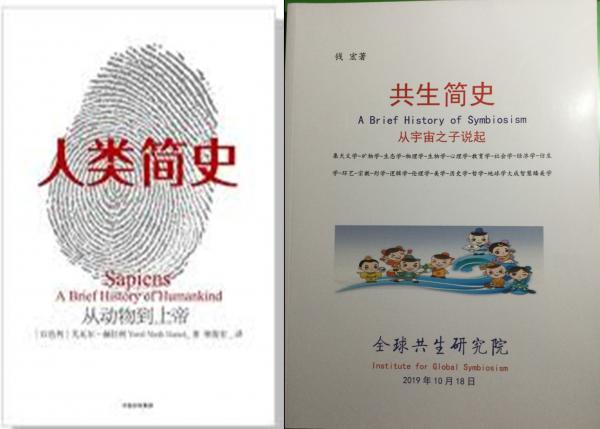
尤瓦尔·赫拉利在《人类简史》中将其描述为“虚构故事的能力”:智人开始讲述不存在的事物——部落神灵、来世、国家、公司、权利。这一能力让智人得以组织数万人的大规模恊作,超越了尼安德塔人等其他人类种群。
然而,赫拉利的视角虽然深刻,却缺了一个关键维度:获得性遗传(Acquired inheritance)的生物反馈机制。
当智人长期沉浸在共同虚构故事中,群体信仰、情感共振与社会恊作反过来对生理产生强大的筛选张力——最典型的范例就是相信《Holy Bible》(圣约)讲述的上帝与人的神圣约定:律法之约、福音之约、共生之约。
这里必须引入表观遗传学(Epigenetics)的概念:如果把基因比作钢琴琴键,那么表观遗传机制,就是真正弹奏钢琴的手。它不改变琴键本身(DNA序列),却能通过甲基化、乙酰化等修饰,决定哪些基因被打开、哪些被关闭。
长期的高强度社会恊作与虚构故事浸润,透过表观遗传机制在智人身上留下了深刻印记:
1.获得性的生物化:催产素(Oxytocin)和多巴胺受体相关基因的表达被优化,使个体在生理上“更倾向于信任他人”;
2.想象力的硬件化:虚构故事不再只是脑中的幻觉,而是通过一代代的文化筛选与生物反馈,将“相信抽象事物”的能力固化为一种生存本能。
这正是社会生物学与生態学共同作用的结果:智人的成功,不仅是文化现象,更是基因与文化双向共襄演化(Co-evolution)的产物。赫拉利描述了“故事如何统治世界”,而交互主体共生理论,则补足了缺失的一环——故事为何能反过来重塑了智人。
信仰在此成为“恊作加速器”:当“相信故事”成为遗传优势,智人在面对陌生人时,大脑预设不再是“敌对”,而是“寻求共同信号”。这种相信的能力本身在进化,让“交互主体性”(Intersubjectivity)从抽象概念变成具现化的法律、宗教与国家,让共生关系从虚幻走向现实。
突破血缘的“互渗”境界
传统生物学的链接逻辑是封闭的:血缘、亲缘、部落、宗法——“你”与“我”之间的纽带,以基因相似度的“小圈子”与排他性共同体为界。
智人却打破了这道藩篱。
首先,智人超越了血缘关系的“你中有我,我中有你”——这是典型的仁人世界,一种二人之间的亲密共融,仍然以“自己人”为界,带有血缘的温暖与排他性。
智人更进一步,进入“你中有我、我中有他、他中有你”的仨人世界境界。这里的“他”,不再是外人,而是构成“我”完整性的先决条件。陌生人、异族、自然万物(它)、乃至超越现实的神性(祂),都成为我们存在的有机组成部分。
其他8类人类,大多停留在血缘或小圈子和排他性共同体的“仁人世界”,而智人率先突破,进入交互主体共生的广阔领域。在这种思维境界中,“他者”(她、它、祂),不再是外部的支配对象、竞争者或威胁,而是构成“我”完整性的先决条件。当智人开始相信“陌生人也是我们的有机组成部分”,当我们与素未谋面的异族、与自然万物(它)、乃至超越现实的神性(祂)建立起深层信任时,社会恊作便超越了利益计算的冷冰冰契约,成为一种全息的、情感的、灵性的互为主体。
也就超越了以主体(Subject)自居的“自我中心主义”——将他者作为纯粹的客体对象(Object)加以支配、操纵和榨取的思维方式与价值取向,进入了充满创意与自由的Intersubjective Symbiosism境地!
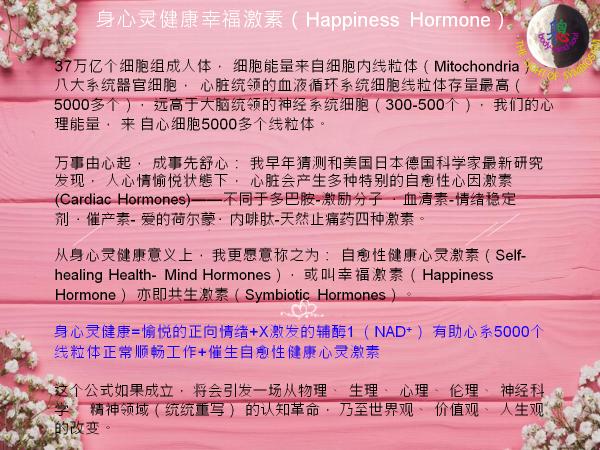
这种贯通“你我他”“身心灵”和“时空意间”的全息、全人称、全生態连接互渗,不仅提高了个体互信与大规模恊作能力,更在生理层面产生深刻影响——交互主体共生的行为与心態,能够延长细胞端粒、强化线粒体功能。
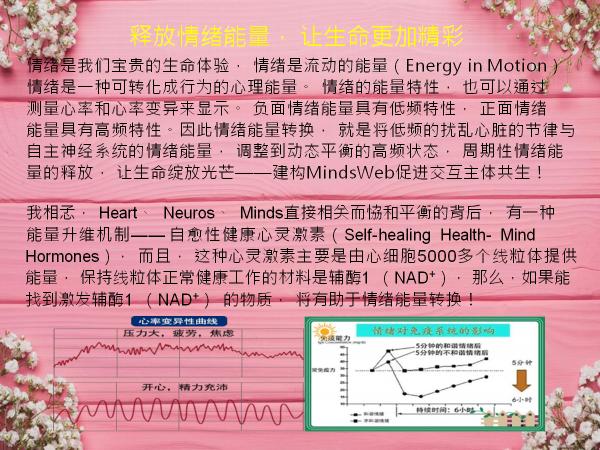
就是说,身心灵、你我他、时空意间的交互共生,通过持续的信念、情感共振与社会支持,降低慢性压力,激活端粒酶活性,提升线粒体能量效率,从而推迟细胞衰老、提升整体生命力。
作为连接者的星际文明
这种相信“没有人是一座孤岛”(No man is an island)的能力,进而升华为尽善尽美连接的愛——愛之智慧(Amorsophia)——又将“你中有我、我中有他、他中有你”的互渗,转化为文明层面的伦理通律与技术伦理基础,为智人从区域走向全球,从地球走向星际提供了最深层的驱动力。
愛之智慧不是情感的浪漫化,而是交互主体共生在意识与伦理层面的最终显现。
从非洲走出,到全球网络,再到即将到来的星际时代,智人的每一次跃迁,都是“连接能力”的溢出。
星际生活不会是带着“地球人”标签,去征服外星环境,而是将自我消融并重组进更广阔的宇宙场域。在那个维度里,星际环境不再是“空洞”或“敌对”的,而是参与共生的交互主体。
未来的星际文明,将依赖的仍然是智人最古老却最先进的武器——交互主体共生的愛之智慧。只有当我们学会与不同星球的环境、不同形態的生命、不同层次的意识,建立互渗式的信任,星际航行才不会沦为另一场殖民或殖官与掠夺,而是真正意义上的宇宙共生。
结语:“因真理,得自由,以共生”
智人的脱颖而出,证明了生命最强大的力量不在于掠夺(那些“一将功成万骨枯”的文明早已一个个飞灰湮灭),而在于超越血缘、宗法、小圈子连接互渗与涌现。
我们智人摒弃了排他性的、封闭的小圈子“共同体”概念,选择了一种无边界的交互主体共生。这不仅是人类的文明历史主脉,更是一种不断向外兼容、永不闭合的生活方式。
我们在彼此的显现中存在,在万物的连接中航向未知。
从血缘到星际,智人用七万年的时间,证明了一个简单却深刻的真理:真正的强大,从来不是征服他者,而是与他者共同成为更大的“我们”。
正所谓“因真理,得自由,以共生”!
后记
这篇文章是对人类演化简史的一次哲学重述。它试图指出:智人真正的“超能力”,不是工具,不是语言,而是相信并连接平衡的愛的能力。
今天,身处“LIFE(生命形态)-AI(智能形态)-TRUST(组织信托形态)交互耦合”的时代,当我们在AM(Amorsophia MindsField/Network,愛之智慧孞態场网)的技术伦理框架下,重新理解这段历史时,会发现:交互主体共生的愛之智慧不仅是过去成长的秘密,也是未来的唯一路径(窄门)。
参考文献:《共生:一种约定创新生活方式的精神力量》(SYMBIOSISM:The Mind Power to Agree on An Innovative Lifestyle,Onebook Press,2021)
附录:现代古人类学研究显示,在距今约300万年至3万年前的时期,地球上确实同时或先后存在过多个Homo属物种(人属),它们都属于广义的“人类”家族。主流科学观点认为,目前已确认的Homo属物种大约有8–9种(不同学者统计略有差异),加上我们自己(智人)正好对应“9类”Homo属人类(按大致出现时间排序):
1.能人(Homo habilis)——约250–150万年前,最早使用简单石器的“手巧人”。
2.魯德爾夫人(Homo rudolfensis)——约200万年前,与能人同期,脑容量略大。
3.直立人(Homo erectus)——约180万–10万年前,第一个走出非洲、会用火、迁徙范围最广的古人类。
4.海德堡人(Homo heidelbergensis)——约70–20万年前,是尼安德塔人和智人的共同祖先。
5.尼安德塔人(Homo neanderthalensis)——约40–4万年前,适应欧洲寒冷气候,脑容量比现代人还大。
6.丹尼索瓦人(Denisovans)——约40–5万年前,主要分布在亚洲,与现代亚洲人、澳洲原住民有基因混血。
7.弗洛雷斯人(Homo floresiensis,“霍比特人”)——约10–5万年前,身高仅1米左右的小型岛屿人类。
8.纳勒迪人(Homo naledi)——约30–20万年前,南非发现的小型脑容量人类。
9.智人(Homo sapiens)——约30万年前至今,我们自己,是唯一存活至今的人类物种。
(有时还会提到吕宋人(Homo luzonensis)等新发现,使列表略有浮动,但主流说法基本围绕以上9类。)
A Brief History of Symbiosis :
How Did Homo sapiens Grow and Thrive?
— Transcending Bloodline and Clan-Law Connections through “Intersubjective Symbiosis”
By Archer Hong Qian
Vancouver, November 2, 2023 – April 18, 2026
In the long course of Earth’s evolution, Homo sapiens was not born powerful.
Legend has it that nine kinds of humans (Homo species) once appeared on Earth, including Homo habilis, Homo rudolfensis, Homo erectus, Homo heidelbergensis, Homo neanderthalensis, Denisovans, Homo floresiensis (“Hobbit”), Homo naledi, and ourselves—Homo sapiens. These “brothers and sisters” who once coexisted with us were in some cases larger-brained, more robust in build, or better adapted.
Physiologically, Homo sapiens appeared fragile and mediocre: short stature, slow running speed, weak bite force, and limited resistance to cold and disease. When the last ice age arrived, Neanderthals once dominated Europe and West Asia but eventually vanished. After hundreds of thousands of years of fierce competition, not only did Homo sapiens survive on Earth, but we left footprints on the Moon, in Mars orbit, and are now on the verge of interstellar voyages.
This victory was not the result of mere genetic mutation or tool upgrades. It was an ontological revolution concerning “belief” and “connection”—Homo sapiens, through intersubjective symbiosis (Intersubjective Symbiosism) and its culminating Amorsophia (Wisdom of Love), completely transcended the traditional barriers of biological evolution.
The Manifestation of Stories and the Genes of Imagination
About seventy thousand years ago, the human brain underwent a pivotal “Cognitive Revolution.”
Yuval Noah Harari, in Sapiens, described it as the ability to tell fictional stories: humans began to speak of things that do not exist—tribal gods, the afterlife, nations, corporations, rights. This capacity enabled Homo sapiens to organize large-scale cooperation involving tens of thousands of individuals, surpassing other human species such as Neanderthals.
Yet Harari’s perspective, though profound, misses a crucial dimension: the biological feedback mechanism of acquired inheritance.
When Homo sapiens became deeply immersed in shared fictional stories, group belief, emotional resonance, and social cooperation in turn exerted powerful selective pressure on physiology—the most typical example being the belief in the sacred covenants between God and humanity narrated in the Holy Bible (the Covenant of Law, the Covenant of Gospel, and the Covenant of Symbiosis).
Here we must introduce the concept of epigenetics (Epigenetics): if genes are the keys on a piano, then epigenetic mechanisms are the hands that actually play the piano. They do not change the keys themselves (the DNA sequence), but through methylation, acetylation, and other modifications, they determine which genes are turned on and which are turned off.
Long-term, high-intensity social cooperation and immersion in fictional narratives left deep marks on Homo sapiens through epigenetic mechanisms:
Biologization of the acquired: Optimization of gene expression related to oxytocin and dopamine receptors, making individuals physiologically “more inclined to trust others.”
Hardwareization of imagination: Fictional stories ceased to be mere mental illusions; through generations of cultural selection and biological feedback, the ability to “believe in abstract things” became solidified as a survival instinct.
This is precisely the joint outcome of sociobiology and ecology. The success of Homo sapiens is not merely a cultural phenomenon, but the product of bidirectional gene-culture co-evolution (Co-evolution). While Harari described “how stories conquered the world,” the theory of intersubjective symbiosis fills the missing piece: how stories in turn reshaped Homo sapiens.
Faith here became a “cooperation accelerator”: when “believing in stories” became a genetic advantage, the human brain’s default setting when facing strangers shifted from “hostility” to “seeking common signals.” This evolved capacity for belief transformed “intersubjectivity” from an abstract concept into the concrete realization of law, religion, and the state, turning symbiotic relationships from illusion into reality.
Transcending Bloodline: Entering the Realm of Mutual Permeation
The linking logic of traditional biology is closed: bloodline, kinship, tribe, clan law—the bond between “you” and “me” is bounded by genetic similarity and the “small circle” of exclusive communities.
Homo sapiens, however, broke through this barrier.
First, it transcended the bloodline relationship of “you are in me, and I am in you”—this is the classic two-person world of benevolence (仁人世界), a close mutual fusion between two parties that still draws a boundary around “our own people,” carrying the warmth and exclusivity of blood ties.
Homo sapiens went further, entering the three-person world realm of “you are in me, I am in him, and he is in you”. Here, “he” is no longer an outsider, but a prerequisite for the integrity of “me.” Strangers, other ethnic groups, all things in nature (it), and even transcendent divinity (He) all become organic parts of our existence.
While the other eight kinds of humans mostly remained in the bloodline or small-circle “two-person world of benevolence” with its exclusive communities, Homo sapiens was the first to break through and enter the vast field of intersubjective symbiosis. In this realm of thought, the “other” (she, it, He) is no longer an external object to be dominated, competed with, or threatened, but a prerequisite for the completeness of “me.” When Homo sapiens began to believe that “strangers are also organic parts of us,” when we established deep trust with unfamiliar ethnic groups, with all things in nature (it), and even with transcendent divinity (He), social cooperation transcended cold contractual calculations of interest and became a holographic, emotional, and spiritual mutual subjecthood.
This permeation, which connects “you, me, and him,” “body, mind, and spirit,” and “spacetime and intent,” not only enhanced individual mutual trust and large-scale cooperation, but also produced profound physiological effects: intersubjective symbiosis can lengthen telomeres and strengthen mitochondrial function. The interactive symbiosis of body-mind-spirit, you-me-him, and spacetime-intent, through sustained belief, emotional resonance, and social support, reduces chronic stress, activates telomerase activity, improves mitochondrial energy efficiency, thereby delaying cellular aging and enhancing overall vitality.
As Connectors of Interstellar Civilization
This capacity to believe that “no one is an island” (No man is an island) further sublimated into the love of perfect connection—Amorsophia (Wisdom of Love)—transforming the mutual permeation of “you are in me, I am in him, he is in you” into the ethical general law and technical-ethical foundation of civilization, providing the deepest driving force for Homo sapiens to move from the regional to the global, and from Earth to the stars.
Amorsophia is not a romanticization of emotion, but the ultimate manifestation of intersubjective symbiosis at the level of consciousness and ethics.
From walking out of Africa, to the global network, to the coming interstellar era, every leap of Homo sapiens has been an overflow of “connecting capacity.”
Interstellar life will not be about carrying the label of “Earthlings” to conquer alien environments, but about dissolving the self and reconstituting it within a vaster cosmic field. In that dimension, the interstellar environment is no longer “empty” or “hostile,” but a participating intersubjective partner.
The interstellar civilization of the future will still rely on Homo sapiens’ oldest yet most advanced weapon—intersubjective symbiosis and Amorsophia. Only when we learn to establish mutually permeating trust with the environments of different planets, different forms of life, and different levels of consciousness, will interstellar voyages cease to be another form of colonialism or exploitation and become genuine cosmic symbiosis.
Conclusion: A Fluid Way of Life
The rise of Homo sapiens proves that the greatest power of life lies not in plunder (civilizations built on “one general’s success at the cost of ten thousand bones” have all turned to dust), but in transcending bloodline, clan law, and small-circle connections through mutual permeation and emergence.
We Homo sapiens have abandoned the exclusive, closed concept of “community” and chosen a borderless intersubjective symbiosis. This is not only the main thread of human civilizational history, but also a way of life that is constantly open to the outside, never closed.
We exist in each other’s manifestation and sail toward the unknown in the connection of all things.
From bloodline to the stars, in seventy thousand years Homo sapiens has proven a simple yet profound truth:
True strength has never been about conquering the other, but about becoming a greater “we” together with the other.
As the saying goes: “Through truth, gain freedom, and through symbiosis!”
Postscript
This article is a philosophical retelling of a brief history of human evolution. It attempts to point out that Homo sapiens’ true “superpower” is neither tools nor language, but the capacity to believe and connect with balanced love.
Today, in an era of “LIFE (life-form) – AI (intelligence-form) – TRUST (organizational-trust-form) interactive coupling,” when we reinterpret this history within the technical-ethical framework of AM (Amorsophia MindsField/Network, the Wisdom of Love Mind-State Field/Network), we will discover that intersubjective symbiosis and Amorsophia are not only the secret of past growth, but also the only path (the narrow gate) to the future.
References: Symbiosis: The Mind Power to Agree on An Innovative Lifestyle (SYMBIOSISM, Onebook Press, 2021)
Appendix: Modern paleoanthropological research shows that between approximately 3 million and 30,000 years ago, multiple Homo species coexisted or succeeded one another on Earth. Mainstream science recognizes roughly 8–9 Homo species (slight variations by scholar), plus ourselves (Homo sapiens), corresponding exactly to the “nine kinds of humans” (listed roughly by appearance time):
Postscript
This article is a philosophical retelling of a brief history of human evolution. It attempts to point out that Homo sapiens’ true “superpower” is neither tools nor language, but the capacity to believe and connect.
Today, in an era of “LIFE (life-form) – AI (intelligence-form) – TRUST (organizational-trust-form) interactive coupling,” when we reinterpret this history within the technical-ethical framework of AM (Amorsophia MindsField/Network, the Wisdom of Love Mind-State Field/Network), we will discover that intersubjective symbiosis and Amorsophia are not only the secret of past growth, but also the only path (the narrow gate) to the future.
References: Symbiosis: The Mind Power to Agree on An Innovative Lifestyle (SYMBIOSISM, Onebook Press, 2021)
Appendix: Modern paleoanthropological research shows that between approximately 3 million and 30,000 years ago, multiple Homo species coexisted or succeeded one another on Earth. Mainstream science recognizes roughly 8–9 Homo species (slight variations by scholar), plus ourselves (Homo sapiens), corresponding exactly to the “nine kinds of humans” (listed roughly by appearance time):
Homo habilis — c. 2.5–1.5 million years ago, the earliest “handy man” to use simple stone tools.
Homo rudolfensis — c. 2 million years ago, contemporary with habilis, slightly larger brain.
Homo erectus — c. 1.8 million–100,000 years ago, the first to leave Africa, master fire, and have the widest migration range.
Homo heidelbergensis — c. 700,000–200,000 years ago, common ancestor of Neanderthals and sapiens.
Homo neanderthalensis — c. 400,000–40,000 years ago, adapted to cold European climates, larger brain than modern humans.
Denisovans — c. 400,000–50,000 years ago, mainly in Asia, with genetic admixture in modern Asians and Australian Aboriginals.
Homo floresiensis (“Hobbit”) — c. 100,000–50,000 years ago, small island humans about 1 meter tall.
Homo naledi — c. 300,000–200,000 years ago, small-brained humans discovered in South Africa.
Homo sapiens — c. 300,000 years ago to present, ourselves, the only surviving human species.