退一步,海阔天空!
退一步,海阔天空!
Step Back, and a Wider World Opens Up!
——川普后两年,何妨做个甩手掌柜?
— Why Not Let Trump Be a Hands-Off Boss for His Final Two Years?
钱宏(Archer Hong Qian)
2026年11月4日凌晨于温哥华

2026年美国中期选举,给川普常识新政提出了一个值得深思的问题:改革的方向和力度固然重要,但社会能否消化改革的成本,普通人能否分享改革的成果,同样决定着新政的成败。
AI革命就是一个典型例子。
AI企业投资数千亿美元,数据中心遍地开花,算力、电力和资本竞相扩张。然而,普通劳动者看到了什么?部分工作正在被AI替代,工资未必同步增长,企业获得的生产率红利也未必转化为劳动者的收入。大型数据中心大量消耗电力、土地、水资源,影响社区生活,甚至推高居民用电成本。
科技巨头获得利润,社区承担代价;资本获得红利,劳动者承担失业风险。这样下去,AI投资越热,社会焦虑可能越深。
这也可能是2026年中期选举中部分州共和党候选人面临的压力来源之一。
AI革命不能只问创造了多少GDP,还要问创造了多少社会净效能GDE。谁得益,谁埋单?谁创造,谁分享?谁投资,谁承担生態背负?
川普推动美国重新工业化、发展能源、建设AI基础设施,已经投入了大量政治精力。但任何政策都有社会承受能力和实际效果问题。国家战略越宏大,越需要有人认真计算成本、分配责任、兑现收益。
另一件值得川普反思的事情,是伊朗。
川普对诺贝尔和平奖的某种情结,究竟在多大程度上影响了他的外交决策,外人难以断定。但有一点是明确:和平不是靠奖项证明的,更不能为了追求和平的名声,而模糊国家战略的目标。
伊朗问题的症结,不在于谈还是打,而在于战略目标是否清楚、谈判承诺是否可信、行动结果能否兑现。如果谈判缺乏执行机制,协议签了也不算数,反复周旋只会消耗时间与战略主动权。
何况,伊朗毕竟是一个拥有九千万人口的地区大国。摧毁军事设施是一回事,推翻政权、重建秩序又是另一回事。军事行动可能迅速展开,政治后果却未必能够迅速收拾。
因此,关键是守住阻止伊朗获得核武器这条战略红线。能通过可信、可核查的协议实现,就谈;谈不成,也必须保留必要的威慑与行动选择,但应明确目标、控制代价、避免陷入旷日持久的战争与政权改造。
这类复杂事务,不妨让卢比奥等专业团队更多承担具体工作。总统把握方向、审定底线、承担最终责任即可,不必事事亲自周旋。
可喜的是,川普已经表示接受选举结果,要与民主党好好合作。川普已经80岁了,为了美国每天玩命干,长期睡眠不足哪受得了?一个经历了两次总统选举胜利、两度入主白宫、改变美国政治议程的人,还有必要事无巨细、处处亲自出马吗?
我的意思是,民主党赢了国会立法权,未必是坏事。一切都是最好的安排!川普常识新政已经取得奇迹般的傲世成绩,后面两年多,该轻松轻松,充分消化一下,何妨做个甩手掌柜?
让年轻人去干!
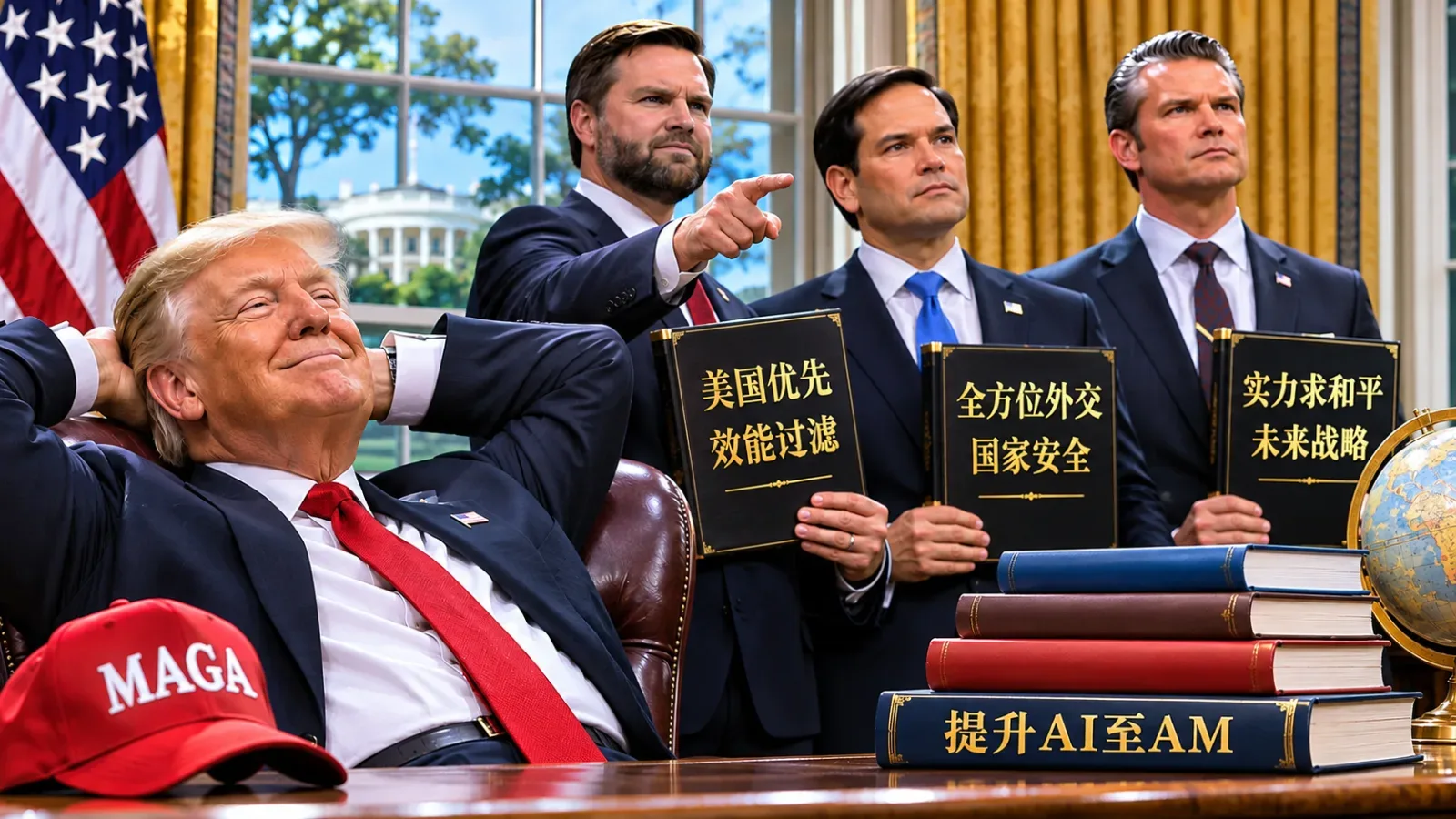
川普常识新政团队中的万斯、卢比奥、赫格塞思,恰好代表三种不同的政治与行政角色。
三个人,政治、外交、军事,各有侧重;相互配合,各显神通。
川普退后一步,掌握大方向,守住重大决策关口,遇到难题作出最后裁断,出了娄子承担应负的政治责任。
年轻人放手干,老总统把好关。权力可以授权,责任不能甩掉。
做个“甩手掌柜”也是一种高超的艺术。
从共生经济学看,生命自组织连接是动能,交互主体共生是势能,二者相应相辅相成。好的领导力,能够激发成员各自的创造活力,通过明确的权责、有效的交互与组织安排,使整个团队产生更大的共生效能。
川普后半程值得面对的,也许正是这样一道题:如何把个人的政治影响力,转化为团队的组织能力;把政策的强力启动,转化为社会可以持续享有的成果?
一位政治领导人的成事智慧,既体现在自己敢做敢当,也体现在能让多少人各尽其才、各负其责、共同成事。
退一步,海阔天空,Step back, and a wider world opens up.
Step Back, and a Wider World Opens Up!
— Why Not Let Trump Be a Hands-Off Boss for His Final Two Years?
Archer Hong Qian
Vancouver, in the early hours of November 4, 2026
The 2026 U.S. midterm elections have raised a question worthy of serious reflection about Trump's Common-Sense Agenda: the direction and determination of reform certainly matter, but whether society can absorb the costs of reform, and whether ordinary people can share in its benefits, are equally decisive to its success or failure.
The AI revolution offers a telling example.
AI companies are investing hundreds of billions of dollars. Data centers are springing up everywhere, while computing power, electricity demand, and capital investment expand at a breathtaking pace. But what are ordinary workers seeing? Some jobs are being replaced by AI, wages are not necessarily rising accordingly, and the productivity gains captured by businesses are not necessarily translating into higher incomes for employees. Meanwhile, massive data centers consume enormous amounts of electricity, land, and water, disrupting community life and potentially driving up household electricity bills.
Technology giants reap the profits while communities bear the costs. Capital captures the gains while workers face the risk of unemployment. If this continues, the hotter the AI investment boom becomes, the deeper public anxiety may grow.
This may also be one of the factors contributing to the pressure faced by Republican candidates in certain states during the 2026 midterm elections.
The AI revolution must be judged not only by how much GDP it generates, but also by how much genuine social net effectiveness—GDE (Gross Domestic Effectiveness)—it creates. Who benefits, and who pays? Who creates the value, and who shares in it? Who invests, and who bears the ecological burden?
Trump has devoted enormous political energy to reindustrializing America, expanding energy production, and building AI infrastructure. Yet every policy must be judged by society's capacity to bear its costs and by its actual results. The grander the national strategy, the more important it becomes to calculate costs carefully, assign responsibilities clearly, and deliver tangible benefits.
Another matter deserving Trump's reflection is Iran.
To what extent Trump's particular attachment to the Nobel Peace Prize has influenced his foreign-policy decisions is difficult for outsiders to determine. But one thing is clear: peace is not validated by prizes, and the pursuit of a reputation as a peacemaker must never blur the objectives of national strategy.
The crux of the Iran question lies in whether the strategic objective is clear, whether negotiating commitments are credible, and whether the intended outcomes can actually be delivered—not simply in whether to negotiate or fight. If negotiations lack enforceable mechanisms, agreements may prove worthless even after they are signed. Endless rounds of bargaining merely consume time and erode strategic initiative.
Moreover, Iran is, after all, a major regional power with a population of some 90 million. Destroying military facilities is one thing; overthrowing a regime and rebuilding political order is quite another. Military operations may be launched swiftly, but their political consequences cannot necessarily be resolved with equal speed.
The essential priority, therefore, is to hold firm to one strategic red line: preventing Iran from acquiring nuclear weapons. If this can be achieved through a credible, verifiable agreement, then negotiate. If negotiations fail, necessary deterrence and options for action must remain available. But objectives must be clear, costs controlled, and the danger of becoming trapped in a prolonged war or an open-ended project of regime change avoided.
Such complex affairs could well be entrusted more fully to Marco Rubio and other experienced members of the administration. The president need only set the direction, approve the bottom lines, and assume ultimate responsibility. There is no need for him to personally manage every round of negotiations.
Encouragingly, Trump has already indicated that he accepts the election results and is willing to work constructively with the Democrats. Trump is now 80 years old. He has been working himself to the bone for America. How long can anyone sustain such a pace with chronically insufficient sleep? Having won two presidential elections, entered the White House twice, and reshaped the American political agenda, does he really need to attend personally to every matter, large and small?
My point is simple: The Democrats' winning control of Congress's legislative power may not necessarily be a bad thing. Everything may well be unfolding for the best! Trump's Common-Sense Agenda has already achieved extraordinary, almost miraculous results that command attention around the world. For the remaining two-plus years of his presidency, perhaps it is time to ease up, allow those achievements to be fully absorbed and consolidated, and enjoy a little breathing room. Why not become a hands-off boss?
Let the younger generation get on with the job!
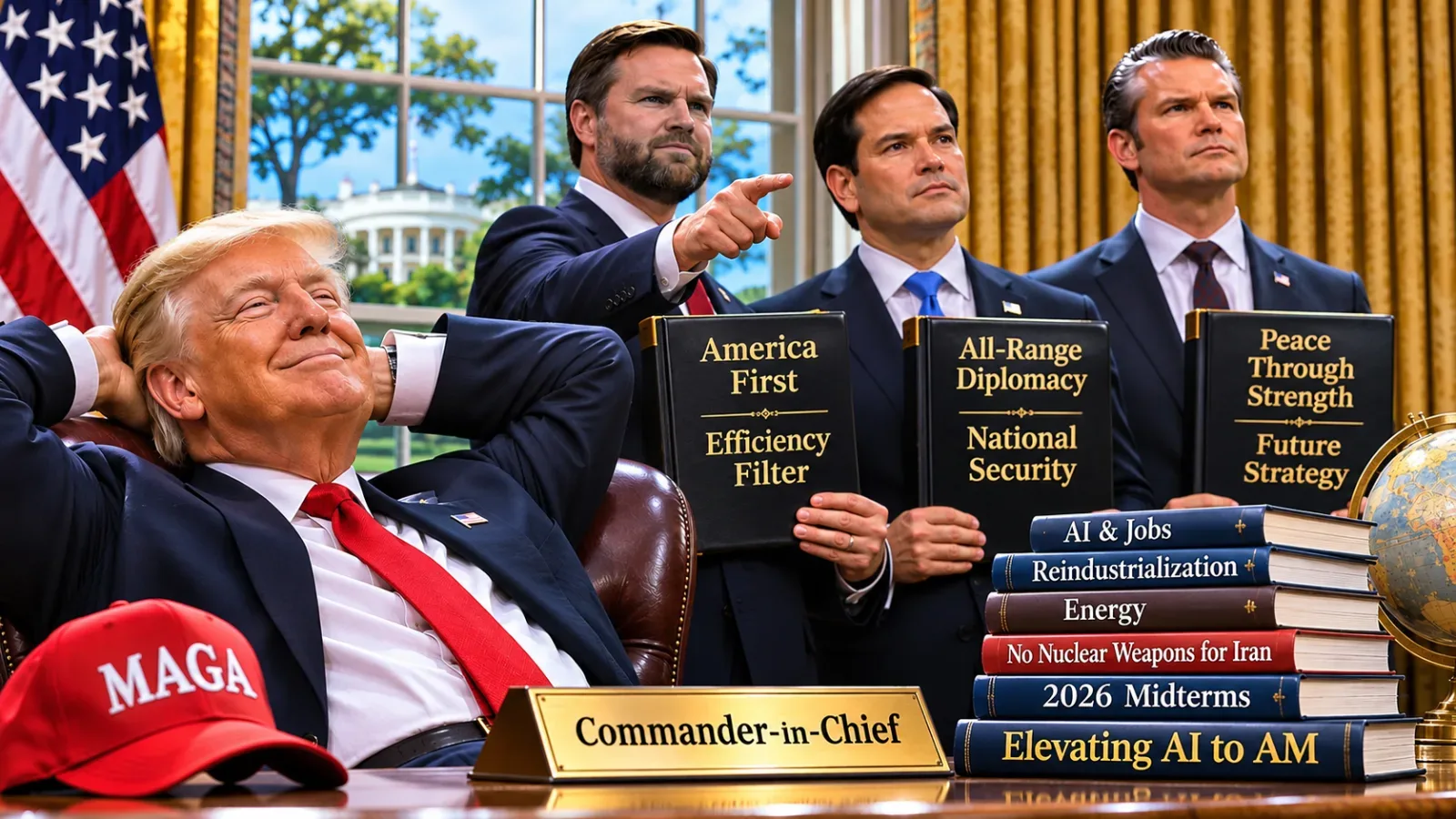
Within Trump's Common-Sense Agenda team, JD Vance, Marco Rubio, and Pete Hegseth represent three distinct political and administrative roles.
The three men have different strengths and responsibilities—politics, diplomacy, and military affairs. Let them work together, complement one another, and each bring his particular talents to bear.
Trump can take a step back, maintain overall strategic direction, oversee major decisions, make the final call when difficult problems arise, and assume the political responsibility that rightly belongs to him when things go wrong.
Let the younger men take the initiative, while the senior president keeps a steady hand on the big decisions. Authority can be delegated; responsibility cannot be shrugged off.
Being a "hands-off boss" is itself a sophisticated art of leadership.
From the perspective of Symbionomics, the self-organizing connections of life provide the kinetic driving force, while intersubjective symbiosis provides the potential energy for co-creation. The two are mutually responsive, complementary, and mutually reinforcing. Good leadership unleashes the creative vitality of individual members and, through clearly defined authority and responsibility, effective interaction, and sound organizational arrangements, enables the entire team to generate greater symbiotic effectiveness.
Perhaps this is precisely the challenge Trump should address in the latter part of his presidency: how can he transform his personal political influence into the organizational capability of his team, and turn the powerful initial momentum of his policies into benefits that society can enjoy sustainably?
The practical wisdom of a political leader is reflected both in the courage to act and take responsibility, and in the ability to enable others to make the best use of their talents, fulfill their respective responsibilities, and accomplish great things together.
Step back, and a wider world opens up.