“军靴不落地”的胜利奇迹
“军靴不落地”的胜利奇迹
Creating the Miracle of Victory with "Boots Not on the Ground"
——切断IRGC Economy命脉,促成波斯文明认知-行动
——Cutting Off the Lifeline of the IRGC Economy to Facilitate the Cognitive-Action Transformation of Persian Civilization
Archer Hong Qian
2026年3月13日晨于 Vancouver
如果确实已经“没什么可炸的了”,战略思维就应当从“摧毁逻辑”转向“静观逻辑”——战略耐心的艺术。
在这一波对伊朗政权的打击中,美以联合行动已接近外部极限。可以说,美以已为伊朗人民摆脱暴虐政权奴役尽了责,然外部力量无法强加深层变革。最终“变不变”,取决于被压榨、被剥夺的伊朗人民自身:是否有生命自组织连接平衡的智慧、勇气和担当?!
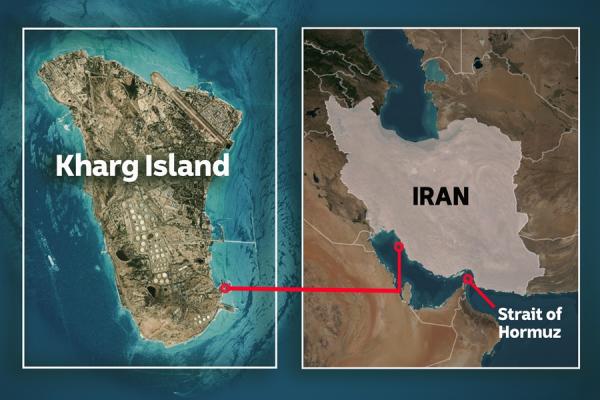
所以,在停火窗口即将到来之际,与其让地面部队“军靴落地”进入波斯本土,不如把注意力放在具有“战略杠杆”意义的关键结构节点上,例如阿拉伯海酷似一只足踵的 Kharg Island。这个小岛,处理伊朗约90%原油出口,每天加载700万桶,是IRGC经济命脉。目前未受直接打击,可能作为故意保留的“杠杆”:摧毁它推高油价至110美元/桶,影响盟友;封锁它则枯竭IRGC资金,迫使内部崩盘。伊朗-伊拉克战争中,该岛韧性强(出口维持150万桶/日),但如今结合无人机/导弹,封锁更可行,无需地面部队。这与“静观逻辑”契合:不落地军靴,通过“软杀伤”放大IRGC压力,促进新波斯觉醒。X平台讨论指出,保留岛屿完整,为后政权时代重启出口提供重建资金流。
关键是,这个岛不仅是伊朗能源出口的重要枢纽,更是所谓“革命卫队经济”(IRGC Economy)的关键节点——一种相当于“刑徒经济”的由伊斯兰革命卫队深度操控能源、金融与贸易体系所形成的权力-资本结构。因此,掌控它,就等于在某种意义上掌控了IRGC Economy命脉的“阿喀琉斯之踵”。
从文明结构的角度看,“革命卫队经济”并不仅仅是一种军事力量,而是一种将军权、资源、金融与政治权力深度绑定的治统形态。正因为如此,IRGC Economy这一结构,既构成了政权稳定的支柱,也可能在历史转折时成为制度演化的压力集中点。
真正决定伊朗未来的,不是炸弹,而是“革命卫队经济”与波斯文明社会觉醒之间的历史张力。
围绕这样的关键节点,维持战略存在与持续观察,既能够减少军事行动的高成本和不确定性,避免可能的政治风险,也能够保持必要的威慑与战略关注,同时为地区局势留出变化的时间窗口,让伊朗内部社会结构与政治张力在自身动力中逐渐发酵。
历史反复证明,一个国家的深层变革很少能够由外力直接塑造。真正的结构转型,往往来自内部社会压力、经济结构调整与价值认知变化的长期交互。在这样的历史过程中,伊朗也可能逐渐形成一种“新认知-行动格局”——某种可以被称为“新波斯”的社会政治重组。
从这个意义上说,与其依赖高成本的直接军事介入,不如抓住关键结构节点、保持战略耐心。所谓“军靴不落地”的胜利,本质上并不是军事奇迹,而是一种对历史结构与文明演化节奏的理解。
最后说一下,联合国安理会 3月11日第2817号决议,以 13票赞成、0票反对、2票弃权(中国、俄罗斯),通过了由 135个国家联署 的议案,强烈谴责伊朗对巴林、科威特、阿曼、卡塔尔、沙特、阿联酋、阿塞拜疆及约旦等国的恐怖攻击。
这一点,也颇耐人寻味。特别是第2817号决议援引《联合国宪章》第51条,支持受害国自卫,并要求伊朗停止袭击。中俄弃权显示不愿完全站队(中国系伊朗石油最大买家),欧盟全联署强化共识。这为“静观”提供合法框架:通过多边压力(如海军封锁)放大张力,推动“新波斯”重组。X观点将此与川普“沉重打击但军靴不落地”联系,强调经济扼杀实现政权更替。
战略耐心艺术的扩展分析:
“军靴不落地”的胜利奇迹,本质上是战略耐心的艺术:不通过大规模地面占领或持久消耗战,而是精准切断IRGC Economy(革命卫队经济)的命脉,让内部矛盾在自身逻辑中自然发酵,最终促成波斯文明社会从“旧认知”向“新认知-行动格局”的转型。这不是军事征服,而是文明演化节奏的深刻把握——变革始终源于内部(如前苏联解体、东欧剧变),外部力量的最佳角色是“催化剂”而非“建筑师”。
创造这一奇迹的关键步骤框架,全部建立在“静观逻辑”之上,避免“军靴落地”带来的高成本、不确定性和政治风险:
1.维持战略存在:海军封锁Kharg周边,精准切断IRGC Economy命脉
Kharg Island处理伊朗约90%的原油出口(每日装载能力高达700万桶),是IRGC Economy的绝对咽喉。目前该岛未遭直接打击,很可能被有意保留为“终极杠杆”:直接摧毁会瞬间推高全球油价至110美元/桶以上,重创世界经济;但通过海军(美以联合舰队+盟友自卫力量)实施有效封锁,则可迅速枯竭IRGC资金链——切断石油收入≈切断政权补贴、雇佣军薪资、代理势力支持与国内维稳资源。
历史先例:两伊战争期间Kharg多次遭轰炸,但出口仍维持在每日150万桶水平,显示其物理韧性;如今无人机、导弹与电子战加持下,封锁而非摧毁更可行,且无需一兵一卒登陆。内部必然分化:IRGC无法支付基层武装与官僚,忠诚度迅速瓦解,政权从“铁板一块”转为“内耗机器”。这正是“软杀伤”的最高境界——不流血,却让对手自我崩解。
2.放大社会张力:支持“新波斯认知-行动”,让经济崩溃引发自下而上抗议
IRGC Economy崩盘将直接导致:
补贴链条断裂(燃料、食品、电力等民生品价格暴涨);
失业与通胀雪球式放大(伊朗2025年通胀已超40%);
基层不满从“隐忍”转向“爆发”。
此时外部可通过信息支持(非军事干预)、人道通道、海外伊朗社区网络,温和放大“新波斯”叙事:回归波斯文明本源、产权清晰的小而美自治、分区止损而非大一统迷思。这种“认知-行动”种子已在伊朗社会潜伏多年(2009绿运、2019油价抗议、2022妇女运动),经济崩溃就是最好的催化剂。目标不是外部强加“颜色革命”,而是让伊朗人民自己意识到:真正繁荣源于内部自组织平衡,而非神权+军阀的榨取模式。
3.从容推进外交,双边、多边经贸谈判,促成全球化3.0“入局”态势
停火窗口(预计本周末或下周初宣布“胜利结束”)是黄金期:
与潜在“新波斯”各方势力(波斯核心区、库尔德、阿拉伯族、俾路支等)建立接触渠道;
推动修订版《亚伯拉罕协约》扩展,承诺去武器化换取安全担保+资本准入(如以色列、海湾国家投资);
利用中俄弃权(安理会2817号决议)的裂痕,从容推进双边/多边经贸谈判——让“入局全球化3.0”成为伊朗各派最现实的选择(而非继续对抗)。
这不仅是止损,更是示范:谁先“入局”常识、法治与市场规则,谁就能获得信用红利与生命增益;谁继续“折腾搞事”,谁将被自动边缘化。
4.风险最小化:全程避免地面战,保持动态威慑IRGC Economy“灾难性弱点”
整个过程拒绝“军靴落地”:
无需占领德黑兰或全国,只需维持对Kharg海域的拒止能力;
威慑梯度清晰:从海军封锁→精准无人机/导弹警告→必要时有限特种行动(如夺取铀料),全程可控;
一岛扼九成出口的结构性弱点,让任何IRGC残余势力都明白:继续顽抗=经济自杀。
这正是DMD(阻击型门罗主义)的精髓:精准外科手术+动态清除威胁萌芽,而非大水漫灌式占领。川普团队已多次表态不愿长期纠缠,预计本周末即可“宣告胜利”——哈梅内伊已亡、核降级、IRGC指挥链断裂,剩下的交给伊朗人民自己演化。
总之,“军靴不落地”的胜利奇迹不是靠火力密度,而是靠对文明节奏的洞察
外部做减法(切断IRGC命脉、降低折腾资本);
内部做加法(社会张力发酵、新认知萌芽);
时间做乘法(耐心静观,让历史自身逻辑展开)。
最终,这种胜利不是军事奇迹,而是战略耐心的艺术:让伊朗在矛盾中转型,形成可持续重组。当IRGC Economy的“刑徒经济”模式不可持续,当波斯人民重拾“产权自律+小即是美”的文明自信时,“新波斯”就自然涌现。
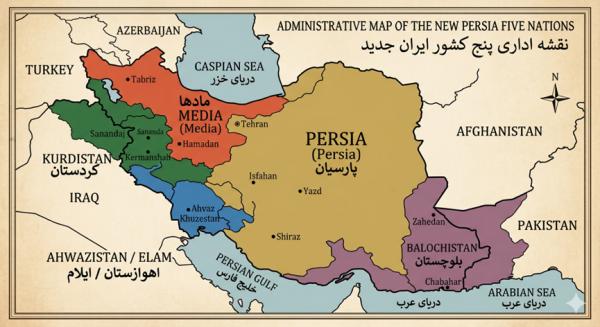
这不仅是伊朗的止损与重生,更是全球化3.0下从支配秩序向交互共生秩序转型的生动样本——将成为2026年地缘政治最深刻的教科书案例。
the Miracle of Victory with "Boots Not on the Ground"
——Cutting Off the Lifeline of the IRGC Economy to Facilitate the Cognitive-Action Transformation of Persian Civilized
Archer Hong Qian
Morning of March 13, 2026, in Vancouver
If there truly is "nothing left worth bombing," strategic thinking must shift from a "logic of destruction" to a "logic of observation"—the art of strategic patience.
In this wave of strikes against the Iranian regime, the U.S.-Israel joint operations have approached the limits of external intervention. It can be said that the U.S. and Israel have already fulfilled their responsibility to help the Iranian people break free from the tyranny of a oppressive regime. However, external forces cannot impose profound changes. Ultimately, whether transformation occurs depends on the oppressed and deprived Iranian people themselves: do they possess the wisdom, courage, and responsibility for a self-organizing balance of life?!
Therefore, as the ceasefire window draws near, rather than allowing ground forces to "put boots on the ground" and enter Persian homeland territory, it is wiser to focus on key structural nodes of genuine "strategic leverage," such as Kharg Island in the Arabian Sea, which strikingly resembles a heel in shape. This small island handles about 90% of Iran's crude oil exports (loading up to 7 million barrels per day) and is the lifeline of the IRGC economy. It has not yet been directly struck, possibly as a deliberately retained "leverage": destroying it would drive oil prices up to $110 per barrel, affecting allies; blockading it would deplete IRGC funds, forcing internal collapse. During the Iran-Iraq War, the island showed strong resilience (maintaining exports at 1.5 million barrels per day), but today, combined with drones/missiles, a blockade is more feasible without ground troops. This aligns with the "observation logic": no boots on the ground, amplifying IRGC pressure through "soft kill" to promote New Persian awakening. Discussions on X platform point out that preserving the island intact provides reconstruction funding flows for restarting exports in the post-regime era.
The key is that this island is not only Iran's critical hub for energy exports but also the pivotal node of the so-called "Revolutionary Guard Economy" (IRGC Economy)—a power-capital structure akin to a "convict economy," deeply controlled by the Islamic Revolutionary Guard Corps through its dominance over energy, finance, and trade systems. Therefore, controlling it equates, in a very real sense, to grasping the "Achilles' heel" of the IRGC Economy's lifeline.
From the perspective of civilizational structure, the "Revolutionary Guard Economy" is far more than a mere military force; it is a governance model that deeply binds military authority, resources, finance, and political power. Precisely because of this, the IRGC Economy serves as both a pillar stabilizing the regime and a potential pressure convergence point for institutional evolution during historical turning points.
What truly determines Iran's future is not bombs, but the historical tension between the "Revolutionary Guard Economy" and the awakening of Persian civilized society.
By maintaining strategic presence and sustained observation around such key nodes, one can reduce the high costs and uncertainties of military action, avoid potential political risks, while preserving necessary deterrence and strategic attention. At the same time, it opens a time window for regional changes, allowing Iran's internal social structures and political tensions to ferment gradually through their own momentum.
History repeatedly demonstrates that profound changes in a nation are rarely directly imposed by external forces. Genuine structural transformations usually emerge from long-term interactions among internal social pressures, economic structural adjustments, and shifts in value cognition. In such historical processes, Iran may gradually form a "new cognitive-action paradigm"—a form of socio-political reorganization that could be termed "New Persia."
In this light, rather than relying on high-cost direct military intervention, it is preferable to seize key structural nodes and exercise strategic patience. The so-called victory with "boots not on the ground" is essentially not a military miracle, but a profound understanding of historical structures and the rhythm of civilizational evolution.
Finally, on March 11, United Nations Security Council Resolution 2817 was adopted with 13 votes in favor, 0 against, and 2 abstentions (China and Russia). Sponsored by 135 countries, it strongly condemned Iran's terrorist attacks on Bahrain, Kuwait, Oman, Qatar, Saudi Arabia, the United Arab Emirates, Azerbaijan, and Jordan.
This point is particularly thought-provoking. Especially since Resolution 2817 invokes Article 51 of the UN Charter, supporting the right of victim countries to self-defense and demanding that Iran cease its attacks. The abstentions by China and Russia indicate reluctance to fully side with Iran (China being Iran's largest oil buyer), while the full co-sponsorship by the EU strengthens consensus. This provides a legal framework for "observation": amplifying tensions through multilateral pressure (such as naval blockades) to promote "New Persia" reorganization. Views on X link this to Trump's "heavy strikes but no boots on the ground," emphasizing economic strangulation to achieve regime change.
Extended Analysis of the Art of Strategic Patience:
The "boots not on the ground" victory miracle is essentially the art of strategic patience: not through large-scale ground occupation or prolonged attrition warfare, but by precisely cutting off the lifeline of the IRGC Economy (Revolutionary Guard Economy), allowing internal contradictions to ferment naturally in their own logic, ultimately facilitating the transformation of Persian civilized society from "old cognition" to a "new cognitive-action paradigm." This is not military conquest, but a profound grasp of the rhythm of civilizational evolution—change always originates internally (like the dissolution of the former Soviet Union and the Eastern European upheavals), with the best role for external forces being a "catalyst" rather than an "architect."
The key steps framework for creating this miracle is entirely built on the "observation logic," avoiding the high costs, uncertainties, and political risks brought by "boots on the ground":
Maintain Strategic Presence: Naval Blockade Around Kharg to Precisely Cut Off the IRGC Economy Lifeline
Kharg Island handles about 90% of Iran's crude oil exports (daily loading capacity up to 7 million barrels) and is the absolute lifeline of the IRGC Economy. Currently, the island has not been directly struck, likely retained intentionally as the "ultimate leverage": direct destruction would instantly drive global oil prices above $110 per barrel, severely impacting the world economy; but implementing an effective blockade through naval forces (U.S.-Israel joint fleet + allied self-defense forces) can rapidly deplete the IRGC funding chain—cutting off oil revenue ≈ cutting off regime subsidies, mercenary salaries, proxy force support, and domestic stability resources.
Historical precedent: During the Iran-Iraq War, Kharg was bombed multiple times, but exports maintained at 1.5 million barrels per day, showing its physical resilience; today, with drones, missiles, and electronic warfare enhancements, blockade rather than destruction is more feasible, without needing a single soldier to land. Internal division is inevitable: the IRGC cannot pay grassroots armed forces and bureaucrats, loyalty rapidly disintegrates, turning the regime from an "ironclad block" into an "internal consumption machine." This is the highest realm of "soft kill"—no bloodshed, yet causing the opponent to self-destruct.
Amplify Social Tensions: Support "New Persian Cognitive-Action" to Let Economic Collapse Trigger Bottom-Up Protests
The collapse of the IRGC Economy will directly lead to:
Subsidy chain breakage (sharp price surges in fuel, food, electricity, and other livelihood goods);
Unemployment and inflation snowballing (Iran's 2025 inflation already exceeded 40%);
Grassroots discontent shifting from "endurance" to "eruption."
At this point, external forces can mildly amplify the "New Persia" narrative through information support (non-military intervention), humanitarian channels, and overseas Iranian community networks: returning to the roots of Persian civilization, clear-property small-and-beautiful autonomy, partitioned damage control rather than grand unification delusions. This "cognitive-action" seed has long lurked in Iranian society (2009 Green Movement, 2019 fuel price protests, 2022 women's movement), and economic collapse is the best catalyst. The goal is not to externally impose a "color revolution," but to let the Iranian people themselves realize: true prosperity originates from internal self-organizing balance, not a theocratic + warlord extraction model.
Calmly Advance Diplomacy, Bilateral and Multilateral Economic and Trade Negotiations, to Foster a "Joining" Posture in Globalization 3.0
The ceasefire window (expected to announce "victory end" this weekend or early next week) is the golden period:
Establish contact channels with potential "New Persia" factions (Persian core areas, Kurds, Arabs, Baloch, etc.);
Promote an expanded revised version of the Abraham Accords, committing to denuclearization in exchange for security guarantees + capital access (such as investments from Israel and Gulf countries);
Utilize the cracks from China and Russia's abstentions (Security Council Resolution 2817) to calmly advance bilateral/multilateral economic and trade negotiations—making "joining Globalization 3.0" the most realistic choice for various Iranian factions (rather than continued confrontation).
This is not only damage control but also a demonstration: whoever first "joins" common sense, rule of law, and market rules can gain credit dividends and life benefits; whoever continues "stirring trouble" will be automatically marginalized.
Risk Minimization: Avoid Ground Warfare Throughout, Maintain Dynamic Deterrence Against IRGC Economy "Catastrophic Weaknesses"
The entire process rejects "boots on the ground":
No need to occupy Tehran or the whole country, just maintain denial capabilities over Kharg waters;
Clear deterrence gradient: from naval blockade → precise drone/missile warnings → limited special operations if necessary (such as seizing uranium materials), fully controllable throughout;
The structural weakness of one island choking 90% of exports lets any IRGC remnants understand: continued resistance = economic suicide.
This is precisely the essence of DMD (Defensive Monroe Doctrine): precise surgical strikes + dynamic elimination of threat buds, rather than flood-irrigation-style occupation. The Trump team has repeatedly stated unwillingness for long-term entanglement, expecting "victory declaration" this weekend—with Khamenei gone, nuclear downgrade, IRGC command chain broken, leaving the rest to the Iranian people's own evolution.
In summary, the "boots not on the ground" victory miracle is not reliant on firepower density, but on insight into the rhythm of civilization:
External subtraction (cutting off IRGC lifeline, reducing trouble-making capital);
Internal addition (fermentation of social tensions, budding of new cognition);
Time multiplication (patient observation, letting history unfold its own logic).
Ultimately, this victory is not a military miracle, but the art of strategic patience: allowing Iran to transform amid its contradictions, forming sustainable reorganization. When the IRGC Economy's "convict economy" model becomes unsustainable, when the Persian people reclaim the civilizational confidence of "property autonomy + small is beautiful," "New Persia" will naturally emerge.
Country/Region | Capital | Notes |
Turkey | Ankara | |
Azerbaijan | Baku | |
Iran | Tehran | New Persia |
Iraq | Baghdad | |
Kurdistan | Erbil | |
Azerbaijan/Iran | Ashgabat | |
Afghanistan | Kabul | |
Pakistan | Islamabad | |
Balochistan | Quetta | |
Armenia | Yerevan | |
Georgia | Tbilisi | |
Armenia/Georgia | Sukhumi |
This is not only Iran's damage control and rebirth, but also a vivid example of the transition from dominant order to intersubjective symbiotic order under Globalization 3.0—it will become the most profound textbook case in 2026 geopolitics.